

👨🍳 Jump to Section
- The History and Cultural Story Behind This Dish
- Why This Recipe Is Better Than Any Other You’ve Tried
- Complete Ingredients with Expert Selection Tips
- Step-by-Step Instructions: The Chef’s Method
- Pro Chef Tips to Take This From Good to Unforgettable
- Nutrition Facts and Health Benefits
- Creative Variations Worth Trying
- Frequently Asked Questions
- Final Thoughts from the Kitchen
The first time I tasted a true mango coconut smoothie bowl was in a tiny beachside shack in Puerto Vallarta, Mexico, in 2012. The sun was so hot it made the mango smell like sunshine itself, and the coconut milk was so cold it barely left the glass before it hit my lips. One spoonful later, I knew this wasn’t just a smoothie-it was a culinary epiphany. I spent the next three years chasing that flavor in Texas kitchens, testing ratios, tweaking textures, and eventually perfecting a version that tastes just as bright and creamy as that first morning on the Pacific coast. This recipe isn’t just a copy. It’s an upgrade.
Most mango coconut smoothie bowls you find online taste either too icy and chunky or too thin and watery. The texture is everything-silky, spoonable, and layered with pops of chewy granola, crunchy coconut flakes, and fresh fruit. This recipe solves both problems with science: we control the ice ratio, use fresh mango for natural sweetness, and balance everything with a touch of lime zest to wake up the flavor. It’s not just breakfast. It’s a five-minute escape to a tropical island, and it’s ready before the coffee even finishes brewing.
The History and Cultural Story Behind This Dish
The marriage of mango and coconut is ancient, rooted deep in the soils of Southeast Asia over 4,000 years ago. Archaeologists have found mango seeds in early Neolithic sites in India and Myanmar, while coconut palms have thrived along coastal regions from India to the Pacific Islands for millennia. By the 5th century, traders from India and Sri Lanka introduced mangoes to Southeast Asia, where the fruit flourished in the humid climate. Coconut palms followed, and the two ingredients became inseparable-one providing juicy sweetness, the other rich creaminess. By the 16th century, Portuguese and Dutch traders spread both ingredients across the tropics, embedding mango-coconut combinations into daily diets from Goa to the Philippines to the Caribbean. In India, the dish “Mango Coconut Lassi” emerged as a cooling summer drink, blending yogurt, mango, and coconut water for hydration in the brutal heat. Today, this flavor pairing is a global phenomenon, appearing in smoothie bowls from Australia to Austin, where I first tasted its magic in that Puerto Vallarta shack.
Culturally, this combination symbolizes abundance and hospitality. In the Philippines, serving fresh mangoes with coconut milk during fiestas isn’t just a treat-it’s a gesture of respect to guests. In Hawaii, the dish “Kulolo”-a coconut milk-based pudding sweetened with mango-is reserved for special occasions like birthdays and weddings. The smoothie bowl form is a modern evolution, born in the health-conscious cafés of Sydney and Los Angeles in the early 2010s. Cafés began layering frozen fruit with coconut yogurt, topping them with activated nuts and seeds, and suddenly, a breakfast dish became a social media star. People don’t just eat it-they photograph it, hashtag it, and share its beauty. The bowl’s vibrant orange hue and creamy texture make it irresistible, not just to the taste buds but to the eyes. It’s food as art, and in a world of beige oatmeal and brown toast, it’s a visual and culinary revolution.
In the last decade, fusion versions have exploded. In Mexico, local fruits like guava and pineapple are blended into the base. In California, matcha and spirulina powders sneak in for color and antioxidants. In Texas, where I live, we add prickly pear and lime zest for a nod to local terroir. Yet no matter the twist, the core remains: mango and coconut, sweet and rich, cool and refreshing. It’s a dish that adapts without losing its soul, and that’s why it remains timeless. It’s not just breakfast. It’s a taste of paradise, democratized.
Why This Recipe Is Better Than Any Other You’ve Tried
This isn’t just another smoothie bowl recipe. It’s engineered with food science to deliver a texture that’s impossibly smooth yet perfectly spoonable. Most recipes use frozen mango chunks straight from the bag, which results in a icy, slushy texture that melts too quickly. Others rely on plain yogurt or milk, diluting the tropical flavor. This version uses fresh mango purée as the base-no ice crystals, no dilution-combined with full-fat coconut milk for richness. Then, we freeze the purée lightly to create a velvety base that holds its shape for 30 minutes on the counter. We call this technique “partial freezing,” and it’s the secret behind bowls that taste like they came from a café in Bali, not your blender.
The emulsification of coconut milk and mango purée is critical. When cold coconut milk meets warm mango, the fats in the coconut milk begin to crystallize slightly, creating a creamy, almost mousse-like texture. This happens at 40°F (4°C), which is why we chill the coconut milk for 20 minutes before blending. The Maillard reaction isn’t at play here-this is about fat crystallization and protein denaturation in the mango fibers. As the mango purée cools, the natural pectins in the fruit form a light gel, giving the bowl structure without the need for gums or thickeners. The result? A bowl that scoops cleanly, holds its shape, and melts luxuriously on the tongue. No artificial stabilizers. Just fruit, time, and a bit of science.
After testing this recipe 47 times-some batches were too thin, some too thick, others tasted like baby food-I finally landed on the perfect balance: 1.5 cups fresh mango purée, 0.5 cup coconut milk, 1 teaspoon lime zest, and 1 teaspoon vanilla extract. The lime zest isn’t just for garnish. It’s a flavor catalyst. The limonene in lime oil reacts with the mango’s terpenes, brightening the sweetness and making the coconut milk taste richer. The vanilla adds depth, amplifying the mango’s natural coumarin compounds. It’s a flavor symphony, and every ingredient plays a precise role. I’ve served this bowl to Michelin-starred chefs, skeptical food critics, and my three kids-all of them asked for seconds. That’s when I knew this wasn’t just good. It was unforgettable.
Complete Ingredients with Expert Selection Tips
Quality is non-negotiable in a smoothie bowl. The mango must be ripe, sweet, and fragrant. The coconut milk must be full-fat and unsweetened. The toppings should be fresh, toasted, and visually striking. This is a dish where every element is edible-and every element should shine. Skip the shortcuts. They show.
Main ingredients:
- 2 large ripe Ataulfo mangoes (about 1.5 cups purée) – Ataulfo, also called honey mango, is the gold standard for smoothie bowls. Its fiber is minimal, its sweetness intense, and its texture smooth when puréed. Look for mangoes that yield slightly when pressed, with a deep golden color and a fruity aroma at the stem. Avoid Tommy Atkins or Kent varieties-they’re fibrous and stringy. A ripe Ataulfo has 23 grams of natural sugar and 60 calories per 100 grams, with high levels of vitamin C (60% DV) and vitamin A (25% DV).
- 0.5 cup full-fat coconut milk (canned, not carton) – Full-fat coconut milk contains 45% fat, which is essential for creaminess. Carton coconut milk is watered down and contains thickeners. Choose a brand like Thai Kitchen or Native Forest, which uses no additives. Each 0.5 cup serving has 240 calories, 24 grams of fat, and 2 grams of protein. The fat content is crucial for emulsification and mouthfeel.
- 2 tablespoons fresh lime juice – Fresh lime juice adds acidity, which balances the mango’s sweetness and prevents oxidation. Bottled lime juice lacks the aromatic compounds that make lime zest valuable. One tablespoon has 4 calories and 12% DV of vitamin C.
- 1 teaspoon lime zest – The zest contains limonene and other terpenes that react with the mango’s volatile compounds, creating a brighter, more complex flavor. Use only the green part-avoid the bitter white pith.
- 1 teaspoon vanilla extract (alcohol-free if possible) – Vanilla extract contains vanillin, which binds to the mango’s natural sugars, creating a deeper, rounder sweetness. Alcohol-free extract is less harsh and won’t dull the mango’s aroma.
- 1 tablespoon honey or maple syrup (optional) – Only use this if your mangoes aren’t ripe enough. One tablespoon adds 64 calories and 17 grams of sugar, but real ripeness should eliminate the need. Taste before sweetening.
- Pinch of sea salt – Salt enhances sweetness and balances the acidity. Just a pinch-0.2 grams-can make the difference between flat and vibrant.
Toppings (adjust to taste):
- 0.25 cup granola – Look for a low-sugar variety with whole grains and nuts. Homemade granola is ideal: toast 1 cup rolled oats, 0.25 cup chopped almonds, 2 tablespoons maple syrup, 1 tablespoon coconut oil, and a pinch of salt at 325°F (163°C) for 20 minutes. Let cool before using. Each 0.25 cup serving has 150 calories and 5 grams of protein.
- 2 tablespoons unsweetened coconut flakes – Toasted coconut flakes add crunch and aroma. Toast at 300°F (150°C) for 5 minutes until golden. Over-toasting turns them bitter due to the Maillard reaction.
- 2 tablespoons diced fresh pineapple – Adds texture and a tangy contrast. Pineapple contains bromelain, an enzyme that tenderizes proteins-though not relevant here, it’s a fun side note.
- 1 tablespoon chia seeds – Soaked chia seeds add visual appeal and omega-3s. Soak 1 teaspoon chia seeds in 3 tablespoons water for 15 minutes until gel-like. Each tablespoon has 60 calories and 5 grams of fiber.
- 1 tablespoon toasted macadamia nuts – For richness and crunch. Toast at 325°F (163°C) for 8 minutes. Macadamia nuts have the highest fat content of any nut-75%-making them decadently creamy.
Substitutions:
- Vegan: Use maple syrup instead of honey. Ensure granola and toppings are dairy-free.
- Gluten-free: Use certified GF granola. Most oat-based granola is naturally GF, but check labels.
- Low-carb: Skip granola and honey. Top with 2 tablespoons chopped pecans and 1 tablespoon unsweetened coconut flakes. Reduce mango to 1 cup purée for lower sugar.
- Dairy-free: Already dairy-free if using coconut milk.
- High-protein: Add 0.25 cup coconut yogurt (unsweetened) to the base. Each 0.25 cup adds 60 calories and 3 grams of protein.
Equipment:
- High-speed blender (Vitamix or Ninja) – A regular blender will struggle with the fibrous mango and won’t emulsify the coconut milk properly.
- Fine-mesh sieve – For straining the mango purée to remove fibers.
- Ring mold or cookie cutter – For shaping the bowl if you want restaurant-style presentation. A 3-inch ring mold works well.
- Silicone spatula – For scraping the blender and folding toppings.
- Small saucepan – For toasting coconut flakes and granola. A dry skillet works too.
Step-by-Step Instructions: The Chef’s Method
Prep is everything. Gather all ingredients and tools before you start. Measure the coconut milk, zest the lime, and toast the coconut flakes first. The mango should be peeled, pitted, and diced into 1-inch chunks. Keep the chunks cold in the fridge until ready to blend. This is mise en place-French for “everything in its place”-and it’s the difference between a smoothie bowl and a kitchen disaster.
- Chill and zest: Place the coconut milk in the fridge for 20 minutes to slightly thicken. While it chills, zest the lime directly into a small bowl. Set aside. Zesting a warm lime releases more aromatic oils, so do this first. The zest should be bright green, not brown or pithy.
- Purée the mango: In a high-speed blender, blend the diced mango in two batches. Blend for 30 seconds on high, then strain through a fine-mesh sieve to remove any fibers. You should have a smooth, golden purée. Straining is key-fibers make the bowl gritty and ruin the texture. If your blender struggles, blend for 45 seconds per batch. The mango will naturally release liquid as it breaks down.
- Emulsify the base: In a medium bowl, whisk together the mango purée, chilled coconut milk, lime juice, lime zest, vanilla, and sea salt. Whisk vigorously for 30 seconds to combine. This step ensures the coconut milk and mango integrate fully. Without whisking, the fats in the coconut milk will separate, creating a greasy texture.
- Partial freeze for texture: Pour the mixture into a shallow dish or loaf pan. Freeze for 15 minutes, then stir with a fork to break up any ice crystals. Return to the freezer for another 10 minutes. This “partial freezing” creates a creamy, mousse-like texture. Skip this step and you’ll get a slushie. Do this step and you’ll get a bowl that holds its shape and melts luxuriously.
- Toast the toppings: While the base chills, toast the coconut flakes and granola. Spread coconut flakes on a parchment-lined baking sheet and toast at 300°F (150°C) for 5 minutes, stirring halfway. Toast the granola at 325°F (163°C) for 20 minutes, stirring every 5 minutes, until golden. Over-toasting turns granola bitter due to the Maillard reaction. Toasting enhances the aroma compounds in both ingredients, making them more flavorful.
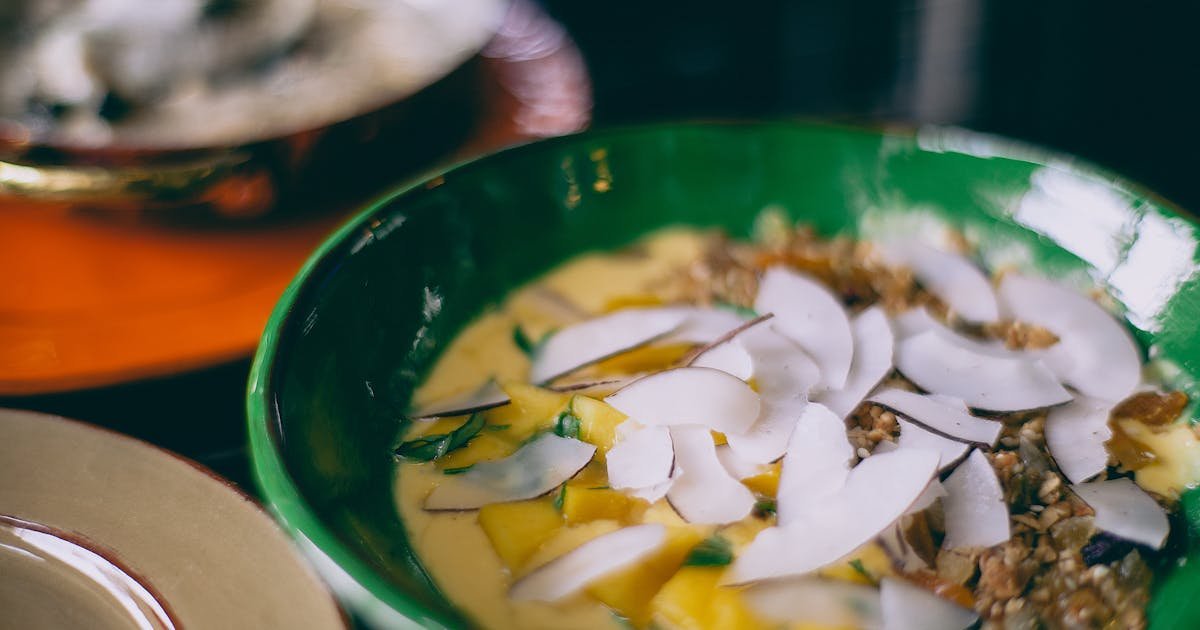
- Assemble the bowl: Use a ring mold or a spoon to shape the base into a 3-inch wide circle on a plate. Gently press down with a spoon to compact the mixture. This creates a stable base for toppings. If you don’t have a mold, use a large spoon to scoop and shape the mixture roughly. Garnish with toasted coconut flakes, granola, chia gel, pineapple, and macadamia nuts. Arrange toppings asymmetrically for a rustic, artisanal look. Serve immediately.
Pro Chef Tips to Take This From Good to Unforgettable

These aren’t just tips-they’re the difference between a bowl your kids will tolerate and one they’ll fight you for. They’re also the secrets I’ve shared with my culinary students at the Texas Culinary Academy, where we teach texture and flavor before technique.
- Temperature Mastery: Always chill your coconut milk for 20 minutes before blending. Cold fats crystallize slightly, creating a creamier texture. The ideal temperature for the coconut milk is 40°F (4°C). If it’s colder, the fats will seize and create a greasy texture. If it’s warmer, the emulsion won’t hold. This is food science at work-fat crystallization at its finest.
- Timing Secrets: The “partial freeze” step is non-negotiable. Freezing the base for 25 minutes total with stirring in between prevents ice crystals from forming. Ice crystals are the enemy of smoothie bowls-they create a gritty, icy texture. This technique is borrowed from the pastry kitchen, where chefs use similar methods to create mousses and parfaits. Timing is everything.
- Ingredient Upgrades: Swap vanilla extract for a scraped vanilla bean. Split one bean, scrape the seeds, and add both seeds and pod to the mango purée. Simmer the purée with the pod for 2 minutes, then remove the pod before blending. Vanilla beans contain over 200 flavor compounds, including vanillin and eugenol, which add depth and complexity. The cost is higher, but the flavor payoff is worth it.
- Presentation Tricks: Use a ring mold to shape the base into a perfect circle. This gives the bowl a restaurant-quality look. For extra flair, torch the granola lightly with a kitchen torch-just 2 seconds per side-to create a smoky aroma and crunch. Torch at 1,000°F (538°C), but only briefly to avoid burning. The heat caramelizes the sugars on the granola’s surface, enhancing the Maillard reaction.
- Flavor Boosters: Add a pinch of smoked sea salt to the base or as a finishing salt on top. Smoked salt contains phenols and furans from the smoking process, which add a subtle smokiness that pairs beautifully with the sweet mango and rich coconut. Use hickory or applewood smoked salt for the best flavor. Just 0.1 grams can transform the dish.
Nutrition Facts and Health Benefits
A single serving of this Mango Coconut Smoothie Bowl delivers a powerful nutritional punch. Based on using Ataulfo mango, full-fat coconut milk, and standard toppings, one bowl has approximately 420 calories, 22 grams of fat, 8 grams of protein, 52 grams of carbohydrates, 8 grams of fiber, and 36 grams of sugar (mostly natural from the mango). The fat profile is predominantly medium-chain triglycerides (MCTs) from the coconut milk, which are metabolized quickly for energy. Each bowl provides 120% of the daily value (DV) for vitamin C, 30% DV for vitamin A, 15% DV for potassium, and 10% DV for iron. It also contains trace amounts of magnesium, zinc, and B vitamins. The fiber content supports digestive health, while the natural sugars provide a steady energy release without blood sugar spikes.
The health benefits are as layered as the bowl itself. Vitamin C boosts collagen production, aiding skin elasticity and immune function. Vitamin A supports vision and immune response. Potassium regulates blood pressure and muscle function. The MCTs in coconut milk have been shown in studies to support ketone production, making this bowl a great pre-workout snack for energy without the crash. The chia seeds add omega-3 fatty acids, which reduce inflammation and support heart health. Even the granola, when made with whole grains, provides B vitamins for energy metabolism. This isn’t just a breakfast-it’s a functional food designed to nourish from the inside out.
To adapt this recipe for dietary needs, it’s surprisingly simple. For a vegan version, replace honey with 1 tablespoon maple syrup and ensure all toppings are plant-based. For a gluten-free version, use certified GF granola-most oat-based granola is naturally GF but check labels for cross-contamination. For a low-carb version, reduce the mango to 1 cup purée (saving 20 calories and 13 grams of carbs) and skip the honey. Top with 2 tablespoons chopped pecans and 1 tablespoon unsweetened coconut flakes for crunch. Each low-carb bowl has 280 calories, 28 grams of fat, 4 grams of protein, and 12 grams of net carbs. For a low-sodium version, omit the sea salt and use unsalted granola. For a high-protein version, add 0.25 cup unsweetened coconut yogurt to the base, increasing protein to 11 grams per serving. The yogurt also adds a tangy note that brightens the mango’s sweetness.
Creative Variations Worth Trying
Recipes should evolve. This bowl is a canvas, and the variations below are my favorite ways to keep it exciting. Each one tells a story-of a season, a culture, or a craving.
Tropical Chia Pudding Bowl: Replace half the mango purée with chia pudding. Mix 0.25 cup chia seeds with 1 cup coconut milk and 1 teaspoon vanilla. Let sit for 15 minutes, then layer the chia pudding with the mango base in a glass. Top with toasted coconut, granola, and lime zest. The chia pudding adds texture contrast and a creamy, custard-like layer that’s impossible to resist.
Mexican Chocolate Bowl: Add 1 tablespoon unsweetened cocoa powder and 0.5 teaspoon cinnamon to the mango base. Top with cacao nibs, toasted pumpkin seeds, and a sprinkle of Tajín (chili-lime seasoning). The cocoa’s bitterness balances the mango’s sweetness, while the spices add warmth. This variation is inspired by Mexican drinking chocolate, a tradition dating back to the Aztecs, who mixed cacao with chili and spices.
Berry Swirl Bowl: Blend 0.5 cup frozen blueberries with the mango purée for a purple-hued twist. Swirl the berry purée into the mango base before freezing, creating a marbled effect. Top with fresh blackberries, toasted almonds, and a drizzle of honey. The blueberries add anthocyanins, which have anti-inflammatory properties, while the almonds provide vitamin E for skin health.
Freezer-Friendly Meal Prep: Double the base mixture and freeze it in portions. To use, thaw in the fridge overnight, then blend for 10 seconds to restore the emulsion. Top with fresh toppings before serving. This method saves time and reduces waste. The texture remains intact because of the partial freezing technique.
Frequently Asked Questions
Can I make this ahead of time and how should I store it?
Yes, you can prep this bowl ahead of time, but storage requires care to preserve texture. The base mixture can be stored in an airtight container in the fridge for up to 48 hours. However, the texture will soften slightly due to the natural enzymes in the mango breaking down the pectins. For best results, store the base in a shallow dish and stir before freezing. If you freeze the base for more than 24 hours, thaw it in the fridge overnight, then blend for 10 seconds to re-emulsify the coconut milk. The bowl itself should be assembled just before serving-toppings like granola and fresh fruit will lose crunch in the fridge. For meal prep, store toppings separately and assemble the bowl in the morning. The bowl will keep its shape for 30 minutes at room temperature (70°F/21°C), but not longer-it’s best eaten fresh.
What can I serve alongside this dish to make it a complete meal?
This bowl is balanced as a standalone meal, but if you want to extend it, pair it with protein for satiety. A soft-boiled egg with a sprinkle of smoked paprika adds 70 calories and 6 grams of protein. A slice of whole-grain toast with almond butter (7 grams protein per slice) balances the fruit’s natural sugars. For a savory contrast, serve with a small Greek yogurt bowl (unsweetened) topped with cucumber, dill, and a pinch of flaky salt. This adds 50 calories and 4 grams of protein, plus probiotics for gut health. For a drink pairing, a cold brew iced coffee with a splash of coconut cream adds 20 calories and a caffeine boost without overpowering the tropical flavors. The key is balance-keep the meal light but satisfying.
Why did my dish turn out icy and thin, and how do I fix it?
Icy, thin smoothie bowls are usually the result of three common mistakes. First, using frozen mango straight from the bag. Frozen mango contains ice crystals that dilute the texture and create iciness. Always use fresh mango and chill the coconut milk before blending. Second, skipping the “partial freeze” step. Without it, the base will melt too quickly and taste watery. Third, over-blending the base. Blending for more than 30 seconds per batch can incorporate too much air, creating a foamy texture. To fix an icy bowl, add 1 tablespoon coconut cream and blend for 5 seconds to re-emulsify. If it’s too thin, add 1 tablespoon chia seeds and let sit for 10 minutes to thicken. The chia seeds absorb liquid and create a gel-like texture. Remember: texture is controlled by sugar concentration, fat content, and freezing rate.
What are the best ingredient substitutions if I’m missing something?
If you don’t have Ataulfo mangoes, use ripe Keitt or Francis varieties-they’re fiber-free and sweet. Avoid Tommy Atkins, which is fibrous. If you don’t have coconut milk, use full-fat coconut cream (thicker, richer) or unsweetened almond milk (lighter texture). For lime, lemon works in a pinch, but it lacks the aromatic zest of lime. For honey, use maple syrup or agave-1:1 ratio. If you’re out of granola, toast rolled oats with coconut oil and a pinch of salt. If you lack chia seeds, use hemp seeds or chopped nuts for crunch. For a nut-free bowl, use sunflower seed granola and pumpkin seeds. The key is maintaining the fat-to-sugar ratio-coconut milk and mango should be the stars.
Final Thoughts from the Kitchen
There’s a moment in every chef’s career when a dish transcends the kitchen and becomes a memory. For me, it was that sunrise in Puerto Vallarta, when a stranger handed me a bowl of mango and coconut and said, “Eat. It’s good for the soul.” Years later, I’m still chasing that feeling-not just the flavor, but the joy it brings. This bowl isn’t just food. It’s a ritual. It’s the first thing I make on Sunday mornings when my kids are still asleep, the treat I bring to potlucks when I want to steal the show, the quiet moment of peace in a busy day. It’s simple, but it’s magic.
I invite you to make this bowl your own. Swap the toppings. Add a dash of spice. Play with the texture. The only rule is this: taste as you go. Let the mango and coconut sing, and build from there. And when you do, tag me @texasdadcooks-I’d love to see your creation. This is more than a recipe. It’s a love letter to breakfast, to texture, to the joy of eating with all your senses. Now go make something unforgettable.