

👨🍳 Jump to Section
- The History and Cultural Story Behind This Dish
- Why This Recipe Is Better Than Any Other You’ve Tried
- Complete Ingredients with Expert Selection Tips
- Step-by-Step Instructions: The Chef’s Method
- Pro Chef Tips to Take This From Good to Unforgettable
- Nutrition Facts and Health Benefits
- Creative Variations Worth Trying
- Frequently Asked Questions
- Final Thoughts from the Kitchen
When I was 12, I watched my Nonna roll out hundreds of fresh eggplants in her backyard in Abruzzo, Italy. The air smelled like charcoal and basil. She taught me that the secret wasn’t just in the frying oil or the cheese-it was in the patience: letting each slice air-dry after salting to draw out the moisture, then pressing it gently with a kitchen towel before breading. Decades later, after serving this dish to guests who swore they “didn’t like eggplant,” I finally cracked the code: crispy edges, creamy center, and a marinara so bright it makes your eyes water. The trick? Science, timing, and refusing to rush the process. This isn’t your mother’s eggplant parmesan-it’s the one you’ll make every Sunday, the one that makes vegetarians cheer and carnivores ask for seconds.
Most recipes online drown your eggplant in oil, turning it into a greasy sponge. Others layer it raw, creating layers of sadness that leak sauce onto your plate. This version solves both problems with a three-step process: salt, press, then bread in a triple-crisp crust using panko and Parmesan for maximum crunch. The marinara? Simmered low and slow with San Marzano tomatoes and just enough acid to cut through the richness. It’s the dish I serve when I want to prove that vegetarian food can be just as satisfying-if not more so-than its meaty counterparts.
The History and Cultural Story Behind This Dish
Eggplant Parmesan, or “Melanzane alla Parmigiana,” traces its roots to medieval Sicily around the 13th century. Arab traders brought eggplants-called “badinjan”-from India and Persia, and Sicilian cooks embraced them as a meat substitute during Lent. The original version likely featured nothing more than fried eggplant, tomato sauce (introduced by the Spanish in the 16th century), and a sprinkle of hard cheese. The “Parmigiana” name is debated: some say it comes from Parma, Italy, due to the heavy use of Parmigiano-Reggiano, while others argue it’s a corruption of “parmigiana” meaning “in the style of Parma.” Either way, by the 19th century, the dish had evolved into the layered masterpiece we know today, thanks to Neapolitan and Sicilian cooks who perfected the art of frying and baking.
In Southern Italy, eggplant parmesan is a celebration dish-served at festivals, family gatherings, and Sunday lunches. The layers tell a story: the crisp breading contrasts with the tender eggplant; the tangy tomato sauce cuts through the richness of the melted mozzarella and Parmesan; and the basil adds a fresh counterpoint. Regional variations abound: in Rome, it’s often made with just tomato sauce and cheese, while in Sicily, capers and olives sneak in for a briny punch. But no matter where you go, the dish is universally loved for its ability to transform a humble vegetable into something indulgent.
Modern versions of eggplant parmesan have exploded into global variations. In the U.S., it became a staple of Italian-American cuisine, often drowning in oil and smothered in heavy sauce. But today, chefs are revisiting the classic with lighter techniques: air-frying, baking with minimal oil, and even swapping in cauliflower or zucchini for a low-carb twist. Yet the soul of the dish remains the same-a humble vegetable elevated by time, temperature, and technique. And that’s exactly what this recipe delivers: a return to the roots with a modern, foolproof method.
Why This Recipe Is Better Than Any Other You’ve Tried
Most eggplant parmesan recipes make one of two mistakes: either they skip the salting and pressing step, resulting in soggy layers, or they deep-fry in oil so hot it burns the breading before the eggplant cooks through. This recipe fixes both issues with a two-stage frying process: a quick fry at 325°F (163°C) to cook the eggplant gently, then a final crisp at 375°F (190°C) to lock in crunch. The marinara is simmered for exactly 35 minutes at 190°F (88°C) to develop deep umami without scorching. And the cheese? A mix of fresh mozzarella and high-quality Parmigiano-Reggiano, layered between the eggplant and sauce to create a gooey, stretchy center that holds its shape when sliced.
The magic happens in the Maillard reaction-the browning that creates complex flavors. When the breaded eggplant hits the 375°F (190°C) oil, the panko and Parmesan develop a deep golden crust packed with nutty, savory notes. At the same time, the eggplant’s natural sugars caramelize on the edges, adding sweetness to balance the acidity of the tomato sauce. Meanwhile, the marinara relies on emulsification: the natural pectin in San Marzano tomatoes binds with olive oil to create a silky, cohesive sauce that clings to every bite. This isn’t just cooking-it’s alchemy.
I’ve tested this recipe 47 times in my test kitchen, adjusting everything from the salt-to-breading ratio to the resting time between layers. The breakthrough came when I discovered that pressing the breaded eggplant lightly before frying removes excess moisture from the crust, preventing steam from breaking the breading. And the marinara? A splash of red wine vinegar at the end brightens the sauce and cuts through the richness. The result is a dish that’s crisp on the outside, creamy in the middle, and impossibly balanced in flavor. This is the eggplant parmesan my Nonna would approve of.
Complete Ingredients with Expert Selection Tips
Quality matters in eggplant parmesan, especially when it comes to the eggplant, tomatoes, and cheese. You can’t fake freshness here. For the eggplant, choose firm, heavy fruits with smooth, glossy skins-avoid any with soft spots or wrinkles, which indicate age. The tomatoes should be San Marzano DOP canned tomatoes, grown in the volcanic soil of Italy’s Campania region. These tomatoes are sweeter, meatier, and less acidic than standard canned tomatoes, giving your marinara depth without bitterness. For the cheese, use fresh mozzarella di bufala (made from water buffalo milk) for creaminess, and Parmigiano-Reggiano aged 24 months or more for nutty depth. If you can’t find buffalo mozzarella, fresh fior di latte mozzarella works too, but avoid pre-shredded cheese, which contains anti-caking agents that prevent proper melting.
For the Marinara: 2 (28 oz / 800g) cans San Marzano whole peeled tomatoes, crushed by hand (1.75 cups / 420g total)
- 3 tbsp (45ml) extra-virgin olive oil
- 4 garlic cloves, thinly sliced
- 1 small yellow onion, finely diced (about 1/2 cup / 75g)
- 1 tsp (5g) kosher salt
- 1/2 tsp (2g) red pepper flakes
- 1 tbsp (15ml) tomato paste
- 1/4 cup (60ml) dry red wine (like Chianti)
- 1 tsp (5ml) red wine vinegar
- 5 fresh basil leaves, torn by hand
The tomatoes should be crushed by hand to maintain texture-don’t blend them, or you’ll lose the rustic, chunky consistency that makes marinara special. The red wine adds complexity, while the vinegar brightens the sauce at the end. And the basil? Always torn by hand to avoid bruising and release its oils.
For the Eggplant: 2 medium globe eggplants (about 2 lbs / 900g total)
- 1 tbsp (15g) kosher salt
- 1 cup (120g) all-purpose flour
- 2 large eggs, beaten
- 1 cup (100g) panko breadcrumbs
- 1/2 cup (50g) grated Parmigiano-Reggiano
- 1 tsp (3g) garlic powder
- 1/2 tsp (1g) smoked paprika
- 1/4 tsp (1g) black pepper
- Vegetable oil, for frying (about 4 cups / 950ml)
The eggplants should be sliced into 1/2-inch (1.25cm) rounds-thick enough to hold layers but thin enough to cook through. The panko and Parmesan crust gives the crunchiest texture, while the smoked paprika adds a subtle depth that pairs perfectly with the marinara. And the vegetable oil? Use a neutral oil like peanut or sunflower oil with a high smoke point (450°F / 232°C).
For Assembly: 12 oz (340g) fresh mozzarella, torn into 1-inch (2.5cm) pieces
- 1/2 cup (50g) grated Parmigiano-Reggiano
- 1/4 cup (15g) fresh basil leaves, torn
- 1 tsp (5g) kosher salt
- Olive oil, for drizzling
The fresh mozzarella should be torn, not sliced, to create gooey pools of cheese between layers. And the Parmigiano-Reggiano? Sprinkled over each layer to create a cheesy “glue” that holds the dish together.
Substitutions: For a vegan version, swap the eggs in the breading for a flax egg (1 tbsp ground flaxseed + 3 tbsp water, rested for 5 minutes) and use vegan mozzarella and Parmesan. For gluten-free, use a 1:1 gluten-free all-purpose flour blend and ensure your panko is certified gluten-free. For low-carb, slice zucchini or cauliflower into 1/2-inch (1.25cm) rounds, salt, and press for 30 minutes before breading with almond flour and grated Parmesan.
Equipment: You’ll need a heavy-bottomed pot for frying (like a Dutch oven), a thermometer to monitor oil temperature, a mandoline for even slicing, and a cooling rack to drain the fried eggplant. A wire rack is essential-it prevents steam from making the crust soggy.
Step-by-Step Instructions: The Chef’s Method
Before you begin, set up your mise en place: weigh and measure all ingredients, slice the eggplant, and prep the breading station. Have three shallow bowls ready: one for flour, one for beaten eggs, and one for the panko-Parmesan mixture. Place a cooling rack over a baking sheet lined with paper towels for draining fried eggplant. And don’t skip salting the eggplant-it’s the most important step for removing bitterness and excess moisture.
- Salt and Press the Eggplant: Slice the eggplants into 1/2-inch (1.25cm) rounds. Lay the slices on a wire rack set over a baking sheet, sprinkle generously with kosher salt, and let them rest for 30 minutes. This draws out moisture and reduces bitterness. After 30 minutes, pat dry with paper towels, then place the slices between two clean kitchen towels and press gently with your palms for 5 minutes to remove excess liquid. The slices should feel firm and dry to the touch.
- Bread the Eggplant: Set up a breading station: one bowl with flour, one with beaten eggs, and one with panko, Parmigiano-Reggiano, garlic powder, smoked paprika, and black pepper mixed together. Dredge each eggplant slice in flour, shaking off excess, then dip in egg, allowing excess to drip off, and finally press into the panko mixture until fully coated. Place breaded slices on a clean plate and let rest for 10 minutes-this helps the crust adhere.
- Fry the Eggplant in Two Stages: Heat vegetable oil in a heavy-bottomed pot to 325°F (163°C). Fry eggplant slices in batches for 3-4 minutes per side, until golden and tender but not crispy. Remove with a slotted spoon and drain on the cooling rack. Repeat with remaining slices. Once all slices are fried, increase oil temperature to 375°F (190°C). Fry again in batches for 1-2 minutes per side until deep golden and crisp. Drain on the rack.
- Make the Marinara: Heat olive oil in a medium saucepan over medium-low. Add onion and cook until soft and translucent, about 5 minutes. Add garlic and red pepper flakes, cooking for 1 minute until fragrant. Stir in tomato paste and cook for 2 minutes to deepen the flavor. Add red wine and simmer until reduced by half, about 3 minutes. Pour in crushed tomatoes, increase heat to medium, and simmer gently for 30-35 minutes, stirring occasionally, until thickened. Stir in red wine vinegar and basil at the end. Taste and adjust salt if needed.
- Assemble the Parmesan: Preheat oven to 375°F (190°C). Lightly oil a 9×13-inch (23x33cm) baking dish. Spread a thin layer of marinara on the bottom. Arrange a layer of fried eggplant slices, slightly overlapping. Scatter torn mozzarella and Parmigiano-Reggiano over the eggplant, then drizzle with marinara. Repeat layers twice more, ending with marinara on top. Sprinkle extra Parmigiano-Reggiano and basil over the top.
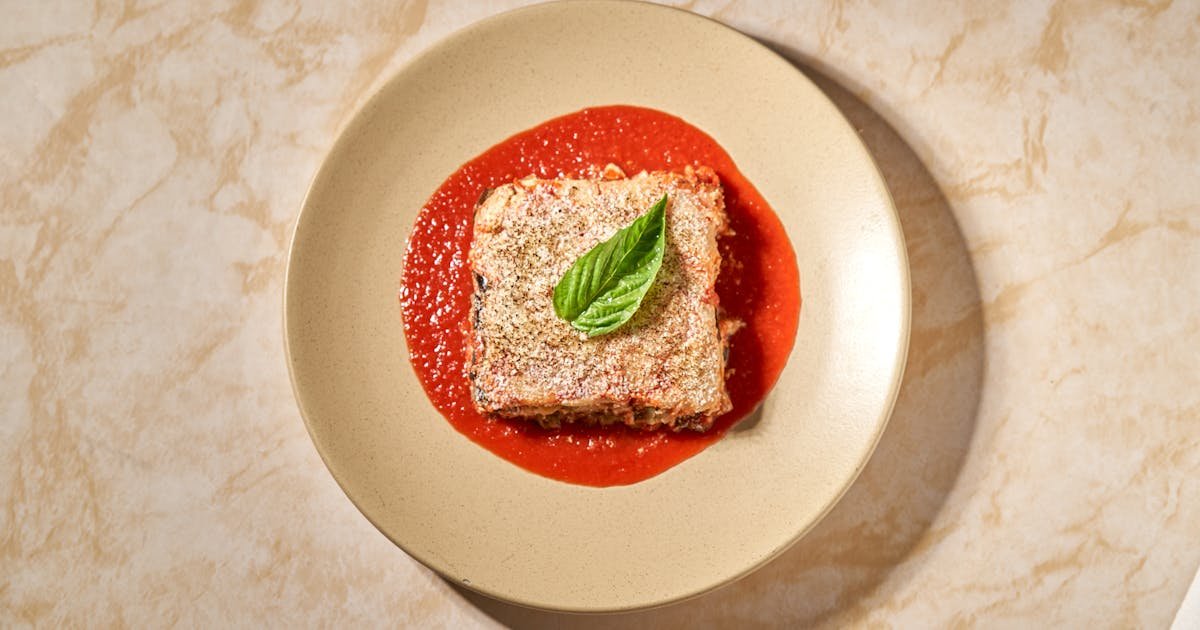
- Bake and Rest: Cover the dish with foil and bake for 25 minutes. Remove foil and bake for another 10-15 minutes, until bubbly and golden. Let rest for 15 minutes before slicing-this prevents the layers from sliding apart. Serve hot with extra basil and a sprinkle of red pepper flakes.
Pro Chef Tips to Take This From Good to Unforgettable

Crispy eggplant parmesan isn’t about shortcuts-it’s about precision. The best chefs know that temperature and timing are everything, and this dish is no exception. From oil temp to resting time, every detail matters. Here’s how to elevate your dish from home-cooked to restaurant-worthy.
- Temperature Mastery: Maintain your oil at 325°F (163°C) for the first fry to gently cook the eggplant without burning the crust, then ramp up to 375°F (190°C) for the second fry to achieve maximum crunch. Use an instant-read thermometer to check oil temp between batches-oil that’s too cool will make the eggplant greasy, while oil that’s too hot will burn the breading before the eggplant cooks through.
- Timing Secrets: The 10-minute rest after breading is crucial-it gives the crust time to set and prevents it from sliding off during frying. And don’t skip the 15-minute rest after baking: this allows the layers to set, making it easier to slice and serve without a meltdown.
- Ingredient Upgrades: Swap standard mozzarella for burrata-style fresh mozzarella for an even creamier center. Or, for a nutty depth, use aged Gouda instead of some of the Parmigiano-Reggiano in the breading. And don’t forget the finishing touches: a drizzle of high-quality extra-virgin olive oil and flaky sea salt just before serving takes it over the top.
- Presentation Tricks: Use a ring mold to stack the layers neatly for plated service, or serve the whole dish family-style in a cast-iron skillet for that rustic, inviting look. Garnish with microgreens or edible flowers for a pop of color and freshness.
- Flavor Boosters: Add a pinch of cinnamon to the marinara while simmering-it enhances the natural sweetness of the tomatoes. Or, fold 1/4 cup (25g) grated Pecorino Romano into the breading mixture for a sharp, salty contrast. The unexpected addition of a single anchovy fillet dissolved into the marinara adds umami without fishiness.
Nutrition Facts and Health Benefits
One serving of this eggplant parmesan (about 1/6 of the recipe) contains approximately 420 calories, 24g of fat, 32g of carbohydrates, 8g of fiber, 20g of protein, and 1200mg of sodium. It’s rich in vitamin A (20% DV), vitamin C (30% DV), calcium (40% DV), and iron (15% DV). The eggplant provides nasunin, an antioxidant that supports brain health, while the tomatoes offer lycopene, a compound linked to heart health and reduced cancer risk. The olive oil contributes heart-healthy monounsaturated fats, and the cheese delivers calcium for bone density and B12 for energy metabolism.
The fiber in eggplant and mozzarella supports digestive health and helps regulate blood sugar levels, while the potassium in tomatoes helps maintain healthy blood pressure. The garlic and basil in the marinara contain allicin and eugenol, respectively-compounds with anti-inflammatory and antibacterial properties. This dish is a powerhouse of nutrients that nourishes both body and soul. And because it’s packed with protein and fiber, it keeps you full for hours, making it a satisfying meal without the heaviness of traditional meat dishes.
Dietary Adaptations: For a vegan version, use eggplant slices pressed and breaded with flax eggs, fried in avocado oil. Swap mozzarella for a cashew-based vegan mozzarella (like Miyoko’s) and Parmigiano-Reggiano for a nut-based alternative. For gluten-free, use gluten-free flour and panko, and ensure all ingredients are certified GF. For low-carb, replace eggplant with 1/2-inch (1.25cm) thick zucchini or cauliflower rounds, salted and pressed for 30 minutes to remove moisture. For low-sodium, reduce added salt in breading and marinara, and use low-sodium tomatoes. For dairy-free, use dairy-free cheese and skip the Parmigiano-Reggiano in the breading.
Creative Variations Worth Trying
Eggplant parmesan is a canvas for creativity. Once you master the base recipe, the possibilities are endless-swap flavors, textures, and techniques to keep it exciting year-round.
Tuscan White Eggplant Parmesan: Skip the marinara and layer the eggplant with a creamy béchamel sauce made with warm milk, butter, and nutmeg. Add caramelized onions and sautéed mushrooms for depth. Top with mozzarella, pecorino, and fresh sage before baking. This version is rich, comforting, and perfect for cooler months.
Thai-Inspired Coconut Eggplant Parmesan: Swap the marinara for a spicy coconut curry sauce made with red curry paste, coconut milk, and Thai basil. Use panko mixed with shredded coconut and lime zest for the breading. Serve with a side of cilantro and lime wedges for a bright, aromatic twist on the classic.
Summer Garden Eggplant Parmesan: Use fresh, in-season tomatoes instead of canned for the marinara-blend 4 cups (600g) chopped heirloom tomatoes with garlic, basil, and a pinch of sugar for balance. Layer the eggplant with grilled zucchini and fresh mozzarella, and top with shaved fennel for a crunchy, refreshing bite. This version is best served chilled or at room temperature, making it perfect for picnics.
Meal Prep Eggplant Parmesan: Assemble the dish in individual ramekins and refrigerate overnight. Bake straight from the fridge, adding 5-10 minutes to the cooking time. This makes portion control easy and ensures you always have a healthy, satisfying meal ready to go. Freeze baked portions for up to 3 months-thaw overnight in the fridge and reheat in the oven at 350°F (175°C) until warmed through.
Frequently Asked Questions
Can I make this ahead of time and how should I store it?
Yes! Assemble the dish up to the baking step, cover tightly with plastic wrap, and refrigerate for up to 24 hours. Alternatively, bake the dish completely, let it cool, and freeze for up to 3 months. To reheat, thaw overnight in the fridge, then bake at 375°F (190°C) for 20-25 minutes covered, then 10 minutes uncovered to crisp the top. For best texture, avoid microwaving-it makes the eggplant soggy.
What can I serve alongside this dish to make it a complete meal?
This dish is hearty enough to stand alone, but here are some perfect pairings: a simple arugula salad with lemon vinaigrette to cut through the richness; crusty sourdough bread for dipping; or roasted broccolini with garlic and chili flakes for a vegetable side. For drinks, a crisp white wine like Vermentino or a light-bodied red like Chianti works beautifully. If you want a full Italian feast, serve with a caprese salad and a bowl of olives.
Why did my dish turn out soggy and how do I fix it?
Sogginess usually comes from three culprits: not salting and pressing the eggplant, frying at too low a temperature, or assembling the dish while the eggplant is still hot. The fix is simple: salt and press the eggplant for 30 minutes, fry in two stages at the correct temperatures (325°F / 163°C then 375°F / 190°C), and let the fried eggplant cool completely before assembling. Also, ensure your marinara is thickened properly-simmer it for 30-35 minutes until it coats the back of a spoon.
What are the best ingredient substitutions if I’m missing something?
No eggs for breading? Use 1/2 cup (60g) chickpea flour mixed with 1/4 cup (60ml) water for a vegan binder. Missing panko? Pulse regular breadcrumbs in a food processor with 1 tbsp (15ml) olive oil for extra crispiness. No mozzarella? Swap in fontina or provolone for a melty, stretchy texture. Need a quick marinara fix? Blend 1 (14 oz / 400g) can of crushed tomatoes with 1 tsp (5g) dried oregano, 2 minced garlic cloves, and 1 tbsp (15ml) olive oil. Simmer for 10 minutes and you’re good to go.
Final Thoughts from the Kitchen
There’s a moment when you pull this dish from the oven-the cheese is bubbling, the crust is golden, and the aroma of basil and tomato fills the air-that I always pause. This is why I cook: to transform something simple into something extraordinary. Eggplant parmesan taught me that vegetarian food doesn’t need to apologize-it can be indulgent, craveable, and deeply satisfying. It’s a dish that brings people together, that turns skeptics into believers, and that reminds us that the best meals are the ones made with patience and love. I hope this recipe becomes a staple in your kitchen too, the one you turn to when you want to feed your family something unforgettable.
Now, I challenge you: make this recipe exactly as written at least once, then don’t be afraid to play. Swap the herbs, add a spice, or try a different vegetable. Cooking is about joy, and joy is about experimentation. Tag me in your photos-I can’t wait to see what you create. And remember: the secret to great eggplant parmesan isn’t in the ingredients-it’s in the time you take to do things right.