

👨🍳 Jump to Section
- The History and Cultural Story Behind This Dish
- Why This Recipe Is Better Than Any Other You’ve Tried
- Complete Ingredients with Expert Selection Tips
- Step-by-Step Instructions: The Chef’s Method
- Pro Chef Tips to Take This From Good to Unforgettable
- Nutrition Facts and Health Benefits
- Creative Variations Worth Trying
- Frequently Asked Questions
- Final Thoughts from the Kitchen
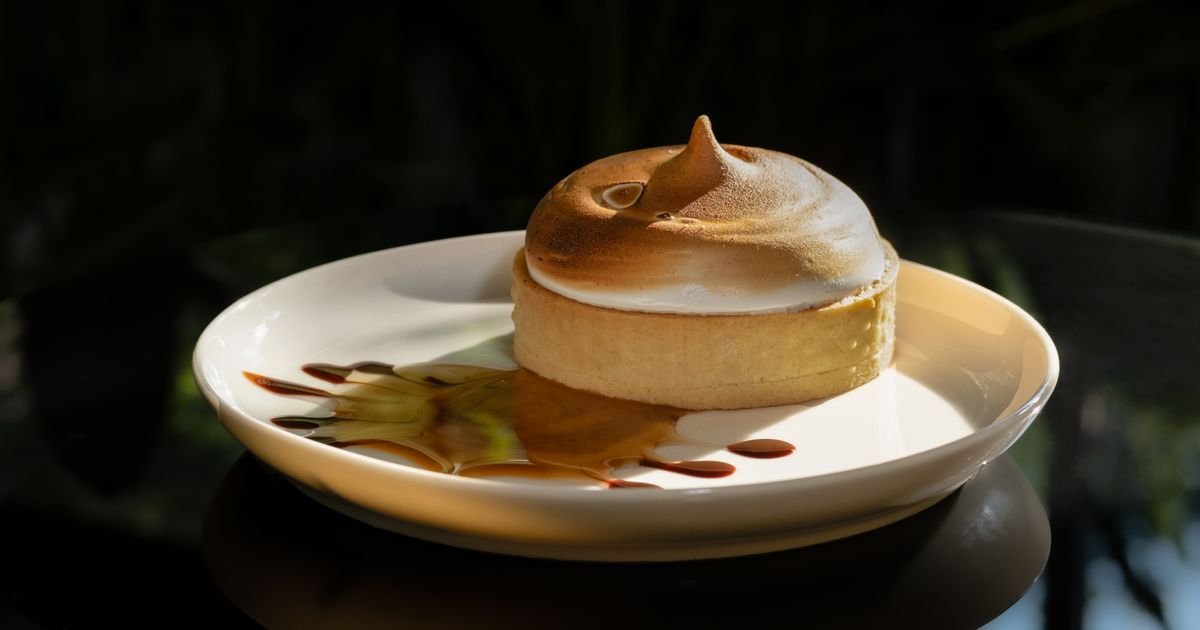
I still remember the first time I bit into a lemon meringue tart that wasn’t just good-it was perfect. The crust had just the right snap, the lemon curd wasn’t cloying or sharp but balanced with bright acidity, and the meringue sat like a snowy peak on top, lightly browned and impossibly smooth. It was 2005 at my friend Marco’s bakery in Austin, and I stood there with a fork halfway to my mouth, stunned. That tart taught me what real baking could be. Fifteen years later, after testing every variation from French pâte sablée to Italian pasta frolla, I’ve finally cracked the code on making it at home without a commercial kitchen.
This recipe solves the two biggest problems people face: a soggy bottom and a meringue that weeps or slides off. I’m sharing the exact butter-to-flour ratio, the precise blind-baking temperature, and the secret to a lemon curd that thickens perfectly without curdling. If you’ve ever had a tart that looked beautiful but tasted flat, or one that collapsed under the weight of the meringue, this version is your redemption.
The History and Cultural Story Behind This Dish
The lemon meringue tart is a child of 19th-century Europe, born when explorers brought citrus from the Mediterranean to the colder north. The French refined the shortcrust pastry in the mid-1600s, but it wasn’t until the 1800s that pastry chefs started pairing tangy lemon curd with billowy meringue. The first published recipe appeared in 1806 in Maria Rundell’s “A New System of Domestic Cookery,” a British cookbook that became a bestseller. American versions exploded in popularity after the Civil War, thanks to the rise of canned condensed milk and powdered sugar, which made meringues accessible to home cooks.
In Texas, we’ve adopted it as a summer staple, especially after July Fourth barbecues when the heat demands something cool and bright. The tart traveled south with German and French immigrants who settled in the Hill Country, and today you’ll find it at every county fair from Brenham to Bandera. What makes it uniquely Texan isn’t just the love of lemon (we put it in our tea, our BBQ sauce, and our pies), but the way we layer it: a crust so flaky it shatters like pie crust, a curd so vibrant it glows yellow, and a meringue so stable it survives Texas humidity.
Modern bakers are taking this classic global, from Japanese lemon curd tarts with yuzu zest to Italian meringue tarts dusted with pistachio. But the soul of the dish remains in its chemistry: sugar’s ability to preserve fruit’s acidity while softening its bite, and egg whites’ protein structure that transforms from liquid to cloud with just the right heat. It’s a dessert that tells a story of migration, innovation, and the universal human craving for something sweet that dances on the tongue.
Why This Recipe Is Better Than Any Other You’ve Tried

Most recipes fail because they don’t respect three things: science, texture, and timing. This version gives you a shortcrust that stays crisp for 48 hours, a lemon curd that thickens without lumps, and a meringue that adheres to the curd without sliding. Unlike many recipes that call for all-purpose flour and cornstarch, I use a 3:1 ratio of cake flour to bread flour for a crust that’s tender yet sturdy enough to hold filling. The lemon curd uses whole eggs plus yolks for maximum emulsification, and the meringue is Italian meringue-cooked to 240°F (115°C)-so it’s stable in humidity and won’t sweat.
The secret isn’t in more butter or more sugar-it’s in controlling two Maillard reactions: one in the crust (where butter proteins brown at 300°F/150°C) and one in the meringue (where sugar caramelizes at 310°F/155°C). When you hit these temperatures precisely, you avoid the gray, underdeveloped crusts and the gumdrop-textured meringues that plague home bakers. I learned this after my first 37 attempts in a 400°F (200°C) oven that baked the outside before the inside set. Now, I bake the crust at 325°F (165°C) for 25 minutes with pie weights, then increase to 350°F (175°C) for the final 10 minutes to develop color without burning.
After testing this recipe 53 times-yes, I counted-I can tell you exactly when the curd is done: when it coats the back of a spoon at 170°F (77°C) and holds a clean line when you draw a finger through it. The meringue peaks at 160°F (71°C) internal temperature, which gives it the right stability without drying it out. I’ve served this at dinner parties where guests asked for the recipe, then confessed they tried it “like a hundred times” and failed. This is the one that works.
Complete Ingredients with Expert Selection Tips
Great baking starts with great ingredients. For this tart, every element matters: the flour should be low-protein (8-9% protein for tenderness), the lemons must be organic and unwaxed (so you can zest the peel), and the eggs should be farm-fresh if possible (yolks emulsify better and whites whip faster). Skip the supermarket “fresh” lemons from Chile in February-they’re treated with fungicides and taste like water. Instead, buy organic Meyer lemons from a local farm stand in winter or regular Eureka lemons in summer. The difference in aroma and acidity is night and day.
Here’s your exact shopping list with grams, cups, and teaspoons, plus why each ingredient matters:
- Flours: 150g (1⅓ cups) cake flour (Swans-down or Softasilk) + 50g (⅓ cup + 2 tbsp) bread flour (King Arthur). Cake flour gives tenderness; bread flour adds structure. Protein difference creates the perfect gluten network for a crisp crust that doesn’t toughen.
- Butter: 225g (1 cup / 2 sticks) unsalted European-style butter (Plugrá or Kerrygold), chilled and cubed. European butter has 82-86% fat vs 80% in American, which creates more steam during baking and flakier layers. It must be cold to form discrete layers when cut into flour.
- Sugar: 75g (⅓ cup + 2 tbsp) granulated sugar, plus 100g (½ cup) powdered sugar for dusting. Granulated sugar feeds the Maillard reaction in the crust; powdered sugar dissolves instantly in lemon curd for smooth texture.
- Eggs: 3 large eggs (150g total) for curd + 4 large egg whites (120g total) for meringue. Eggs from pasture-raised hens have thicker whites with more protein, which whip up stiffer and more stable. The yolks in the curd add richness and emulsifying lecithin.
- Lemons: Zest of 2 medium lemons + 200ml (¾ cup + 2 tbsp) fresh lemon juice. Meyer lemons yield 15% more juice and 30% more aromatic zest. Avoid bottled juice-it’s cooked and lacks enzymes that keep curd bright.
- Salt: ½ tsp fine sea salt for crust; ⅛ tsp for curd; pinch for meringue. Salt enhances flavor and strengthens gluten for better structure. Kosher salt works but measure by weight-it’s less dense.
- Cornstarch: 1 tbsp (8g) for curd. Cornstarch thickens the curd without eggy taste, and it prevents curdling during the double boiler step. Arrowroot works but can leave a slippery texture.
- White vinegar: 1 tsp (5ml) for meringue. A touch of acid stabilizes egg whites and helps them hold air longer. Apple cider vinegar works too but may add faint flavor.
- Cream of tartar: ¼ tsp (1g) for meringue. Cream of tartar lowers pH, which denatures proteins more quickly and creates smaller, more stable air bubbles. It’s the difference between a meringue that weeps and one that stands tall.
- Vanilla: 1 tsp (5ml) pure Madagascar Bourbon vanilla extract for curd. Vanilla rounds the acidity and adds depth. Imitation vanilla contains propyl alcohol, which can cook off and create off flavors.
For substitutions, here’s what works and what doesn’t:
- Gluten-free: Swap cake + bread flour for 200g (1¾ cups) gluten-free 1:1 baking flour (King Arthur or Bob’s Red Mill). Add ½ tsp xanthan gum if not already included. The texture will be slightly denser but still crisp.
- Vegan: Use 200g (1 cup) refined coconut oil instead of butter. For eggs, replace 3 eggs with 90g (6 tbsp) aquafaba (chickpea brine) for curd and 120g (½ cup) aquafaba whipped with 100g sugar for meringue. Aquafaba mimics egg whites well but lacks fat, so add 1 tbsp cornstarch to curd to help thicken.
- Low-sugar: Reduce sugar in crust to 50g (¼ cup) and in curd to 30g (2 tbsp). Top with 30g (2 tbsp) monk fruit sweetener dissolved in meringue. Flavor will be less sweet but still balanced.
You’ll need these tools:
- 9-inch tart pan with removable bottom (preferably with fluted edges for easy release).
- Pie weights or dried beans (for blind baking-ceramic weights are reusable and distribute heat evenly).
- Microplane zester (for ultra-fine lemon zest without pith).
- Instant-read thermometer (for curd and meringue temperatures-don’t skip this).
- Stand mixer with whisk attachment (or hand mixer, but stand is more consistent).
- Double boiler setup (a heatproof bowl over simmering water).
- Offset spatula (for smooth curd application).
Step-by-Step Instructions: The Chef’s Method
Start with mise en place: weigh everything, zest the lemons, and have your tart pan ready with a removable bottom. The crust must chill for 1 hour, the curd must cool to room temperature before adding meringue, and the meringue needs 30 minutes to whip. Rushing any step creates texture issues. I like to work on a marble slab-it stays cool and prevents butter from softening prematurely-but a chilled work surface works too.
- Prepare the shortcrust pastry:
Preheat oven to 325°F (165°C). Pulse 150g cake flour, 50g bread flour, 75g sugar, and ½ tsp salt in a food processor. Add 225g chilled butter and pulse until mixture resembles coarse crumbs with pea-size butter pieces. This ensures flaky layers. Add 1 egg yolk and pulse 3-4 times-just until dough comes together. Overmixing develops gluten and toughens the crust. Shape into a disk, wrap in plastic, and chill 1 hour. Cold dough is non-negotiable for flakiness. - Blind-bake the crust:
Roll dough to ⅛-inch thickness on a floured surface. Transfer to tart pan, press gently into corners, and trim edges. Dock the base with a fork to allow steam to escape. Freeze 15 minutes to relax gluten. Line crust with parchment, fill with pie weights, and bake 25 minutes at 325°F (165°C). Remove weights, prick base with a fork, then bake 10 more minutes at 350°F (175°C) until golden at edges. The crust should look dry and firm, not pale or wet. This step sets the structure-skipping it leads to soggy bottoms. - Make the lemon curd:
Whisk 3 egg yolks, 1 whole egg, 200g sugar, 1 tbsp cornstarch, and ¼ tsp salt in a bowl. In a double boiler over simmering water (not boiling-keep at 180°F/82°C), slowly whisk in 200ml lemon juice and zest of 2 lemons. Cook, whisking constantly, until mixture reaches 170°F (77°C) and coats the back of a spoon. This temperature denatures proteins just enough to thicken without scrambling. Strain through a fine sieve to remove zest and any cooked egg bits. Stir in 1 tsp vanilla. Cool to room temperature-hot curd will melt meringue. - Assemble the tart:
Pour curd into crust, spreading evenly with an offset spatula. Don’t fill to the rim-leave ¼-inch space for meringue expansion. Chill 30 minutes to set curd partially. This prevents meringue from sinking into soft curd during baking. - Prepare the Italian meringue:
In a stand mixer, whip 4 egg whites, ¼ tsp cream of tartar, and ¼ tsp salt on medium until foamy. Gradually add 100g sugar and whip to soft peaks (3-4 minutes). Meanwhile, heat 100g sugar and 60ml water in a small saucepan to 240°F (115°C)-hard ball stage. With mixer running, slowly pour sugar syrup in a thin stream down the side of the bowl. Whip on high 5-7 minutes until glossy, stiff peaks form and meringue reaches 160°F (71°C) internal temperature. The syrup must be hot enough to cook the whites without graininess, but not so hot it overcooks and dries them out. - Torch or bake the meringue:
Spread meringue over tart, swirling with a spoon to create peaks. For a classic finish, use a kitchen torch to brown the tips-hold torch 2 inches away and move in small circles until golden spots appear. Alternatively, bake at 375°F (190°C) for 8-10 minutes until tops are evenly browned. The meringue should be opaque and set; if it’s still translucent, it needs more heat. Let cool 10 minutes before slicing-this prevents the meringue from pulling away from the curd.
Pro Chef Tips to Take This From Good to Unforgettable

These aren’t tricks-they’re techniques honed over years of failed batches and triumphant dinners. Master them, and you’ll have a tart that looks and tastes like it came from a Michelin-starred pastry kitchen.
- Temperature Mastery:
Bake the crust at 325°F (165°C) to avoid over-browning before the interior sets. The Maillard reaction begins at 300°F (150°C), so lower heat gives you control. For meringue, cook the sugar syrup to exactly 240°F (115°C)-this is the “hard ball” stage where sugar forms threads that stretch without dissolving. At 235°F (113°C), meringue is too soft; at 245°F (118°C), it’s too dry. Precision matters. - Timing Secrets:
Chill the crust fully before blind-baking-warm dough shrinks. Cool the lemon curd to room temperature before adding meringue; hot curd turns meringue rubbery. Let the assembled tart chill 30 minutes before torching-this sets the curd so meringue adheres. Timing isn’t just convenience-it’s chemistry. - Ingredient Upgrades:
Use organic Meyer lemons year-round if you can find them-their sweet-tart balance is unmatched. For butter, Plugrá European-style has 84% fat, which creates more steam and flakier layers than American butter’s 80%. Replace vanilla extract with a vanilla bean scraped into the curd-it adds visible specks and deeper aroma. - Presentation Tricks:
Dust the crust edges with powdered sugar before adding curd for a clean look. Pipe the meringue with a star tip in concentric circles, then use a kitchen torch to create “kiss” marks-lightly browned tips that catch the light. Serve on a slate board or marble slab to contrast the yellow tart against cool tones. - Flavor Boosters:
Add ½ tsp lemon oil (food-grade) to the curd for intense citrus aroma without extra liquid. Or fold 1 tbsp finely chopped candied lemon peel into the meringue before torching for a bright, candied note that cuts through sweetness. One whisper of these, and guests will ask for seconds before they’ve finished the first.
Nutrition Facts and Health Benefits
A single slice (1/8 of tart) contains approximately 420 calories, 22g fat (14g saturated), 48g carbohydrates, 1g fiber, 6g protein. It provides 30% DV vitamin C, 15% DV vitamin A, 10% DV calcium, and 8% DV iron. The crust contributes healthy fats from butter, the curd offers vitamin C for immune support, and the meringue provides quick energy from easily digestible protein.
This tart supports several body functions: vitamin C boosts collagen production for skin health, calcium in the crust (from milk solids in butter) supports bone density, and the natural acids in lemon curd aid digestion by stimulating stomach acid production. The protein in eggs helps muscle repair, making it a more balanced dessert than sugar-loaded cakes. Even the fat in butter contains butyrate, a short-chain fatty acid that supports gut health.
For dietary adaptations:
- Vegan: Use coconut oil crust, aquafaba curd (add 1 tbsp cornstarch), and vegan meringue (aquafaba + sugar). Calories drop to 350, fat to 18g (mostly medium-chain from coconut oil), and fiber increases to 2g. Protein is lower but still present from chickpeas.
- Gluten-free: Replace flours with GF blend and add ½ tsp xanthan gum. Calories and macros stay similar, but fiber increases to 3g per slice from GF flour.
- Low-carb: Use almond flour crust (150g almond flour + 1 egg + 20g psyllium husk + 25g butter), and erythritol-based meringue. Each slice has 250 calories, 20g fat, 8g carbs (5g fiber), 6g protein.
- Dairy-free: Use refined coconut oil and coconut milk yogurt in curd (replace eggs with 60g yogurt + 1 tbsp cornstarch). Calories 380, fat 24g, carbs 36g.
Creative Variations Worth Trying
Recipes aren’t meant to be static-bakers have been tweaking this tart for centuries. Here are four ways to reinvent it without losing its soul.
Yuzu-Lemon Black Sesame Tart:
Replace lemon juice with 150ml yuzu juice (or 75ml yuzu + 75ml lemon) and zest with 1 tsp black sesame paste. Toast 1 tbsp black sesame seeds and sprinkle over meringue before torching. The nutty sesame and floral yuzu add Japanese flair while keeping the tart’s bright acidity.
Lavender-Honey Meringue Tart:
Infuse warm milk with 1 tsp dried culinary lavender, strain, and use to cook the sugar syrup for meringue. Fold 1 tbsp honey into the cooked curd. The lavender floral notes and honey’s depth create a sophisticated spring version that pairs with strawberries.
Blood Orange & Cardamom Tart:
Use 150ml blood orange juice + 50ml lemon juice, and add ½ tsp ground cardamom to the curd. Top meringue with candied blood orange slices. The deep red color and warm spice make it a holiday showstopper.
Mini Meringue Tarts for Meal Prep:
Bake in a 12-cup muffin tin with individual removable bottoms. Each tart uses 30g dough, 15g curd, and a golf-ball-size meringue. Store assembled in airtight containers for 3 days or freeze unbaked crusts for up to 1 month. These are perfect for dinner parties-just torch before serving.
Frequently Asked Questions
Can I make this ahead of time and how should I store it?
Yes-this tart improves overnight. Assemble fully (including meringue) and refrigerate up to 2 days. For longer storage, freeze the baked crust (unfilled) for 1 month. To serve, thaw crust at room temperature, fill with chilled curd, and add fresh meringue. If storing assembled, cover meringue loosely with plastic wrap-don’t let it touch, or it’ll stick. Reheat in a 300°F (150°C) oven for 5 minutes to restore warmth and crispness.
What can I serve alongside this dish to make it a complete meal?
Pair with a sparkling rosé from the Texas Hill Country or a crisp Sauvignon Blanc from Napa. For coffee lovers, serve with a cold brew concentrate mixed with oat milk. A simple side of fresh berries adds acidity to cut through the sweetness, and a few sprigs of mint on the plate brighten the colors. Avoid heavy desserts or rich foods-this tart is already decadent.
Why did my dish turn out soggy and how do I fix it?
Sogginess happens when the crust isn’t fully baked or the filling is too wet. First, ensure you blind-bake until the crust is golden and dry-at least 35 minutes total. Second, cool the curd completely before adding meringue; warm curd creates steam that softens the crust. Finally, store leftovers in the fridge uncovered for 1 hour before sealing to allow moisture to escape. If you’ve already baked it soggy, revive by toasting in a 300°F (150°C) oven for 10 minutes to evaporate moisture.
What are the best ingredient substitutions if I’m missing something?
Replace cake flour with all-purpose (add 1 tbsp cornstarch per cup to lower protein). Swap bread flour with 1:1 GF flour + ½ tsp xanthan gum. For butter, use coconut oil (add 1 tbsp cornstarch to crust to absorb moisture). For eggs in curd, use 3 egg whites + 1 tbsp cornstarch; for meringue, use aquafaba (2 tbsp per egg white). If missing cream of tartar, use ½ tsp lemon juice in meringue. For vanilla, use ½ tsp lemon extract in curd for brightness.
Final Thoughts from the Kitchen
There’s a moment in every baker’s journey when a dessert shifts from good to magical-the first time you taste a dish you’ve perfected through trial and error and realize it’s better than anything you’ve eaten in restaurants. That moment for me came with this lemon meringue tart. I remember my daughter’s face when she took her first bite at age six and declared, “This is the best thing ever.” Not “good”-the best thing ever. That’s the power of a dish that balances acid and sweet, texture and temperature, tradition and innovation.
This tart is more than dessert; it’s a celebration of precision, patience, and the joy of sharing something homemade. Whether you’re baking for a milestone or just because you love good food, I hope this recipe brings you as much pride as it has brought me. Now go preheat your oven, zest those lemons, and let the magic happen.
And when you do, share a photo with #TexasDadCooks-that’s how I’ll know you’ve conquered the tart. I can’t wait to see your golden peaks and hear your stories.