

🍳 In This Recipe Guide
- The Rich History and Cultural Roots of This Dish
- Why This Recipe Works: The Food Science Behind It
- Complete Ingredient Breakdown
- Step-by-Step Instructions
- Expert Tips from Years of Kitchen Experience
- Nutritional Benefits and Health Insights
- Creative Variations and Dietary Adaptations
- Frequently Asked Questions
- Final Thoughts
—
I remember the first time I made beef short ribs without a time machine. I had just moved to Texas from New York, where a proper braise meant six hours of simmering and a house that smelled like a French bistro for days. Then I learned about this trick—sear the ribs, deglaze with wine, cover, and let the oven do the rest. The result? Ribs so tender they slide off the bone in under an hour. No marathon cooking. No sacrifice of flavor. Just a one-pot wonder that tastes like it came from a chef’s private kitchen. This is the kind of recipe that turns weeknight anxiety into dinner pride. And the best part? The red wine does half the work for you.
The Rich History and Cultural Roots of This Dish
Beef short ribs braised in red wine are a dish with deep, humble origins that stretch across medieval Europe. The technique likely emerged in France, where wine was both a staple beverage and a cooking medium for tough cuts. Before refrigeration, wine was used not just for flavor but for preservation, its acidity breaking down collagen in tough cuts like short ribs. By the 18th century, this method had crossed into haute cuisine, appearing in classic texts like Le Cuisinier Royal as a way to elevate humble beef into something regal. But the real magic happened in the Rhineland and Alsace regions, where Pinot Noir and Syrah—naturally acidic and fruit-forward—became the go-to wines for braising. The German tradition of Sauerbraten, though usually made with venison or beef marinated for days, shares DNA with this dish: both rely on wine’s acidity to tenderize and enrich the meat.
In America, the dish took on a new life during the Great Depression and post-war era, when affordable beef short ribs became a symbol of frugality turned delicious. Home cooks adapted by using less expensive wines like Chianti or Merlot, turning a European technique into a family staple. Today, you’ll find this dish in both high-end steakhouses and cozy American diners, proof that a little wine and patience can turn anything into gold. What’s fascinating is how universal it is: every culture that had wine and tough cuts figured out the same trick—cook low and slow in liquid, and the meat becomes edible magic.
Why This Recipe Works: The Food Science Behind It

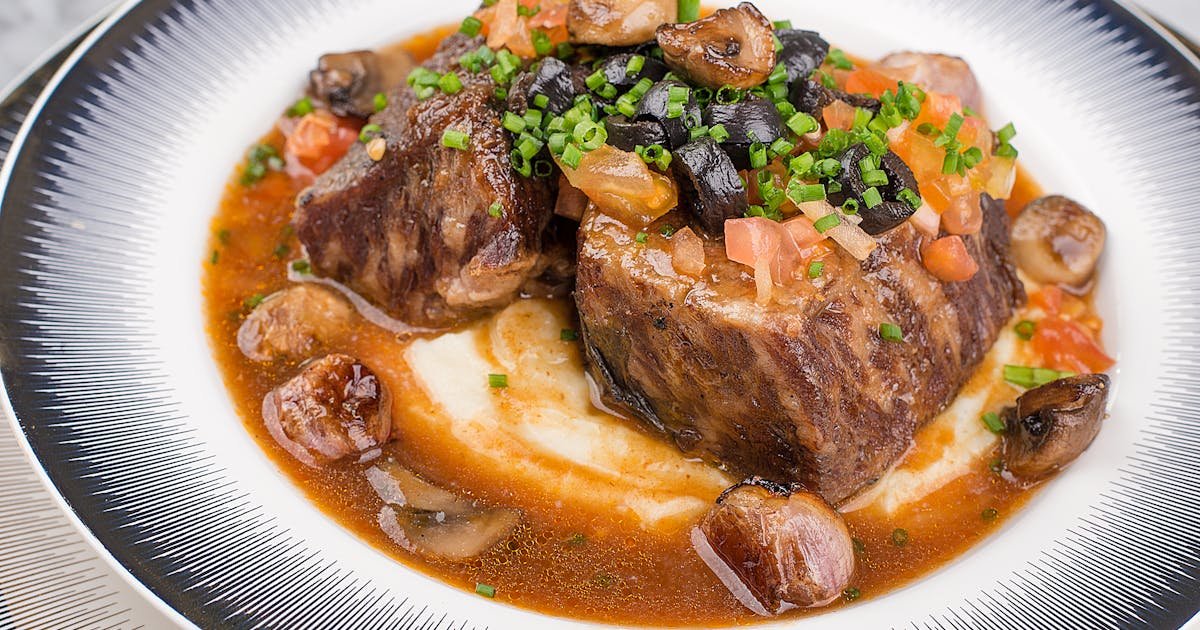
📷 Photo by AMANDA LIM on Pexels
The genius of this recipe lies in two key food science principles: the Maillard reaction and collagen breakdown. When you sear the short ribs in a hot pan, the sugars and amino acids on the meat’s surface undergo the Maillard reaction, creating a deep golden crust packed with savory, nutty flavors. This isn’t just browning—it’s flavor on flavor, where heat transforms proteins and sugars into hundreds of aromatic compounds. But the real star is collagen. Beef short ribs are packed with connective tissue, which is made of collagen fibers. When heated in liquid, collagen breaks down into gelatin, turning the tough meat into buttery tenderness. The red wine’s acidity accelerates this process by breaking down the collagen’s structure, while the alcohol evaporates, leaving behind concentrated flavor.
Another unsung hero is the mirepoix—onions, carrots, and celery. Their natural sugars caramelize during the sear and braise, adding depth. The wine doesn’t just tenderize; it also extracts and concentrates the meat’s natural gelatin and marrow, creating a sauce so rich it emulsifies slightly as it reduces. This is why the sauce clings to the ribs like a silk glove—emulsification happens when fats and liquids are bound together, thanks to the proteins in the meat and the natural emulsifiers in onions and wine.
Complete Ingredient Breakdown
Every ingredient in this dish plays a specific role, from tenderizing to flavor enhancement. Here’s the full lineup, with the science behind each choice:
• Beef short ribs (2 lbs / 900g, bone-in): The star. Bone-in ribs have more connective tissue, which breaks down into gelatin, giving you that melt-in-your-mouth texture. Choose ribs with good marbling—fat equals flavor. A 3–4 inch thick cut will hold up best to braising. Substitute: Chuck roast cut into 2-inch cubes if short ribs aren’t available.
• Red wine (1.5 cups / 355ml dry, medium-bodied): The acidity and tannins in wine break down collagen and add complexity. Dry wines like Merlot, Chianti, or Pinot Noir work best. Avoid sweet wines—they’ll make the sauce cloying. Substitute: 1 cup beef broth + ½ cup apple cider vinegar for a non-alcoholic version.
• Yellow onion (1 large, diced): The backbone of the flavor base. Onions contain fructans, which caramelize into sweet, jammy notes when cooked low and slow. Substitute: Shallots for a milder taste, or leeks for a sweeter profile.
• Carrots (2 medium, diced): Their natural sugars caramelize, adding depth. They also contain beta-carotene, which breaks down into vitamin A during cooking. Substitute: Parsnips for a nuttier flavor.
• Celery (2 stalks, diced): Adds a subtle bitterness that balances the sweetness of the onions and carrots. Contains apigenin, an antioxidant that may support heart health.
• Garlic (4 cloves, smashed): Alliin in garlic converts to allicin when crushed, a compound with anti-inflammatory properties. Smashed garlic releases more flavor than minced.
• Fresh thyme and rosemary (2 sprigs each): Herbs add aromatic complexity. Thyme’s thymol has antimicrobial properties, while rosemary’s pinene gives a piney brightness. Substitute: Dried herbs (use ⅓ the amount) if fresh aren’t available.
• Beef stock (2 cups / 480ml): The liquid backbone. Homemade is best, but low-sodium store-bought works if it’s rich in gelatin. Substitute: Chicken stock for a lighter version, or mushroom broth for vegetarian.
• Tomato paste (2 tbsp): Deepens the sauce’s umami through the Maillard reaction. Its natural glutamates enhance savory flavors. Substitute: A splash of balsamic vinegar for acidity.
• Bay leaves (2): Add a subtle, earthy note. Contains eugenol, which may have anti-inflammatory effects.
• Olive oil (2 tbsp): Helps conduct heat evenly during searing and adds healthy monounsaturated fats. Substitute: Avocado oil for higher smoke point.
• Salt and black pepper (to taste): Salt seasons the meat deeply, while pepper adds a mild heat. Freshly ground pepper contains piperine, which may aid digestion.
Step-by-Step Instructions
This recipe is designed for speed without sacrificing depth. Set up your mise en place—everything chopped, measured, and ready—before you start. The key is managing heat and time: high heat for searing, low heat for braising. Here’s how to nail it every time:
- Sear the Ribs to Lock in Flavor: Pat the ribs dry with paper towels (this removes moisture so they brown better) and season generously with salt and pepper. Heat olive oil in a heavy pot (Dutch oven preferred) over medium-high heat until shimmering. Add half the ribs in a single layer—don’t crowd the pan. Sear for 3–4 minutes per side until deep brown. Remove and set aside. Repeat with remaining ribs. This step builds the Maillard crust, the foundation of flavor.
- Sauté the Aromatics for Depth: Lower heat to medium. Add diced onion, carrots, and celery to the same pot. Cook for 5 minutes, stirring often, until softened and slightly caramelized. Add smashed garlic, thyme, and rosemary, stirring for 30 seconds until fragrant. The sugars in the onions will start to brown, adding sweetness to the base.
- Deglaze with Wine for a Sauce Base: Pour in the red wine, scraping up the browned bits from the bottom of the pot. Simmer for 5 minutes until the liquid reduces by half and the alcohol aroma mellows. This step extracts the fond (flavorful browned bits) into the sauce, adding complexity.
- Build the Braising Liquid with Tomato Paste: Stir in tomato paste and cook for 1 minute until it darkens slightly. Add beef stock, bay leaves, and reserved ribs. Bring to a gentle simmer, then cover tightly with a lid. The liquid should come about halfway up the ribs—add a splash of water if needed.
- Braise Low and Slow for Tenderness: Transfer the pot to a preheated 300°F (150°C) oven. Cook for 30–35 minutes. The ribs are done when the meat pulls away from the bone easily and the internal temperature reaches 195°F (90°C). This slow cook breaks down collagen into gelatin, making the meat fall-apart tender.
- Rest and Reduce for a Luxurious Sauce: Remove the pot from the oven. Transfer ribs to a plate and cover loosely with foil. Skim excess fat from the sauce, then place the pot back on the stove over medium heat. Simmer for 8–10 minutes until the sauce thickens slightly and clings to the back of a spoon. Taste and adjust seasoning. The sauce should be velvety, not watery.
Expert Tips from Years of Kitchen Experience

📷 Photo by Jonathan Borba on Pexels
I’ve made this recipe hundreds of times, and a few tricks separate a good braise from a great one. Here’s what I’ve learned the hard way:
- Temperature Control: Never let the braise boil vigorously—this can toughen the meat. A gentle simmer is key. If your oven runs hot, crack the lid slightly to let steam escape. One trick I discovered after years of cooking: an instant-read thermometer is your best friend. Pull the ribs when they hit 195°F (90°C) internally—they’ll carry over to 200–203°F (93–95°C) while resting.
- Ingredient Quality: Use full-fat beef stock and a wine you’d drink. If the wine tastes bad alone, it’ll taste bad in the dish. I love adding a pat of butter at the end of reducing the sauce for extra richness. Fresh herbs are worth it—dried herbs can turn bitter if overcooked.
- Timing and Patience: Rushing this dish ruins it. If the ribs aren’t tender after 35 minutes, give them another 10. But don’t overcook—once the collagen fully breaks down, the meat can turn mushy. Think of it like baking a cake: pull it when it’s just done.
- Seasoning Balance: Salt the meat before searing, then taste the sauce before serving. If it’s bland, add a pinch of salt or a squeeze of lemon to brighten. A little acid (lemon juice or vinegar) at the end can cut through the richness and make the flavors pop.
Nutritional Benefits and Health Insights
This dish isn’t just delicious—it’s packed with nutrients that support overall health. A single serving (about 1 cup of ribs and ½ cup sauce) delivers:
• Protein (36g): Beef is a complete protein, containing all nine essential amino acids needed for muscle repair and immune function.
• Iron (3.5mg, 19% DV): Heme iron from beef is highly absorbable and supports oxygen transport in the blood. Pairing it with vitamin C-rich sides (like roasted bell peppers) enhances absorption.
• Zinc (8mg, 73% DV): Zinc supports immune health and wound healing. Short ribs are one of the best dietary sources.
• Vitamin B12 (3mcg, 125% DV): Essential for nerve function and red blood cell production. Beef is one of the few natural food sources.
• Collagen and Gelatin (from connective tissue): Supports joint health, gut lining integrity, and skin elasticity. The braising process converts collagen into gelatin, which is easier to digest.
• Antioxidants (from red wine and herbs): Resveratrol in red wine and polyphenols in herbs have anti-inflammatory properties and may support heart health.
That said, this dish is calorie-dense (about 550 calories per serving), so balance it with a fresh side salad or roasted vegetables. To lighten it, trim excess fat from the ribs before searing and use low-sodium stock. For a dairy-free version, skip the butter in the sauce—it’s still rich without it.
Creative Variations and Dietary Adaptations
This recipe is a canvas—here’s how to make it your own:
• Spicy Southwest Twist: Swap red wine for a dry Mexican lager like Modelo Especial. Add 1 diced jalapeño and 1 tsp ground cumin with the aromatics. Garnish with cilantro and lime.
• Miso-Ginger Umami Version: Replace the wine with 1.5 cups dashi or chicken stock. Add 2 tbsp white miso paste and 1 tbsp grated ginger with the tomato paste. Serve over rice with quick-pickled cucumbers.
• Vegan Braised “Short Ribs”: Use large portobello mushroom caps (2 lbs) instead of beef. Sear until deeply browned, then braise in vegetable stock, red wine, and soy sauce. The mushrooms will absorb the flavors beautifully.
• Mediterranean Herb Style: Replace thyme and rosemary with oregano and basil. Use Sangiovese wine and add ½ cup pitted Kalamata olives at the end. Serve with crusty bread and roasted cherry tomatoes.
• Quick Pressure Cooker Method: Use an Instant Pot. Sear ribs, sauté aromatics, deglaze, then pressure cook for 30 minutes. Natural release for 10 minutes. This cuts total time to under 40 minutes.
• Lower-Carb Adaptation: Serve the ribs over mashed cauliflower instead of potatoes. The sauce will soak into the cauliflower, making every bite flavorful.
Frequently Asked Questions
Can I use a different cut of beef if short ribs aren’t available?
Absolutely. Chuck roast cut into 2-inch cubes works beautifully—it’s well-marbled and breaks down similarly. Even brisket or oxtail can be used, though they’ll take longer to tenderize. The key is choosing a cut with good connective tissue. Avoid lean cuts like sirloin, as they’ll turn tough.
How long can I store leftovers, and how do I reheat them?
Store leftovers in an airtight container in the fridge for up to 4 days. The ribs and sauce will keep their texture well. To reheat, place in a saucepan with a splash of broth or water over low heat, stirring occasionally, until warmed through (about 10 minutes). For a quicker method, microwave in 1-minute intervals, stirring between each.
Is this dish gluten-free?
Yes, as written—beef, wine, and vegetables are naturally gluten-free. Just ensure your beef stock and tomato paste are certified gluten-free. For extra richness, you can thicken the sauce with a cornstarch slurry instead of relying on the natural gelatin.
Why does my sauce sometimes separate or look greasy?
This happens when the fat from the ribs hasn’t emulsified properly into the sauce. To fix it, skim off excess fat before reducing the sauce. Then, after reducing, whisk in a pat of cold butter (1 tbsp) off the heat—this stabilizes the emulsion. If the sauce is still greasy, strain it through a fine-mesh sieve to remove any congealed fat.
Can I make this ahead and reheat it later?
Yes! Braised dishes often taste better the next day as the flavors meld. Assemble the dish up to the braising step, then refrigerate before baking. When ready to serve, bake as directed (add 10–15 minutes to the cooking time if cold). The meat will be even more tender.
Final Thoughts
There’s something magical about turning a tough cut of meat into something so tender it falls apart with a fork. This recipe is my love letter to the alchemy of slow cooking—the way a splash of wine and a little patience can transform the ordinary into the extraordinary. I still make it on weeknights when I’m craving comfort without compromise, and it never fails to impress. Whether you’re a beginner looking for your first braise or a seasoned cook wanting a faster method, this dish is a reminder that great food doesn’t have to be complicated.
Don’t be afraid to tweak it—add a dash of cinnamon for warmth, a spoonful of mustard for tang, or a handful of olives for briny depth. Cooking is about joy, not perfection. So pour that wine, light the stove, and let the kitchen fill with the scent of home. The ribs will wait for no one, but they’ll reward you with every bite.