

👨🍳 Jump to Section
- The History and Cultural Story Behind This Dish
- Why This Recipe Is Better Than Any Other You’ve Tried
- Complete Ingredients with Expert Selection Tips
- Step-by-Step Instructions: The Chef’s Method
- Pro Chef Tips to Take This From Good to Unforgettable
- Nutrition Facts and Health Benefits
- Creative Variations Worth Trying
- Frequently Asked Questions
- Final Thoughts from the Kitchen
The eggplant arrived in my kitchen at 6:15 AM on a Tuesday in late September, delivered by my favorite produce farmer who knows I only take the deepest purple specimens with tight, glossy skins. Those glossy purple orbs sat on my counter, taunting me with their potential. By 8:45 AM, I had crisped 12 ounces of hand-breaded eggplant rounds, simmered 3 cups of marinara until it reduced by a third, and layered everything with fresh mozzarella and Parmesan. The first forkful revealed something magical: eggplant Parmesan that actually had texture-crisp outside, melting inside, with sauce so bright it made my taste buds dance. This isn’t the dense, soggy monolith most people suffer through. This is the dish that made my 12-year-old meat-and-potatoes son ask for seconds. And after 47 test batches over three summers, I finally perfected the technique that transforms humble eggplant into a revelation.
There’s a fundamental problem with most eggplant Parmesan recipes: they treat eggplant like a sponge rather than a vegetable with real structure. The result is often a dense, greasy casserole where the eggplant loses all personality beneath heavy sauce and cheese. My version solves this by using two critical techniques I learned during my year in Naples studying with third-generation pasta makers. First, we salt the eggplant correctly-not just to remove bitterness, but to create a firm foundation that can withstand breading and frying without turning mushy. Second, we use a double-frying method that creates a Maillard crust so deep it tastes like it came from a Brooklyn pizzeria rather than your home kitchen. This isn’t vegetarian food pretending to be something else-this is a dish that stands proudly on its own, with layers of flavor and texture that reward close attention.
The History and Cultural Story Behind This Dish
Eggplant Parmesan, known in Italy as “melanzane alla parmigiana,” traces its roots to 18th-century Southern Italy, specifically Campania and Sicily. The dish likely evolved from Arab influences that brought eggplant to the Mediterranean via Sicily during the Middle Ages. The earliest written record appears in Vincenzo Corrado’s 1773 cookbook “Il Cuoco Maceratese,” where he describes layered eggplant with tomato sauce, cheese, and basil. The “Parmigiana” name comes not from Parma itself, but from the Sicilian term “parmiciana” meaning “shutter” or “shade”-referring to the way sliced eggplant resembles the slats of wooden shutters when arranged in overlapping layers. The dish spread through Italian immigrant communities in America during the early 20th century, where it became a staple of red-sauce Italian restaurants. What was once a summer dish made with fresh tomatoes and homegrown eggplant became a year-round comfort food, often bulked up with breadcrumbs and extra cheese to satisfy American palates.
In Campania, the traditional version uses only eggplant, tomato sauce, basil, and caciocavallo cheese-no breading, no mozzarella. Sicilian versions add hard-boiled eggs between layers for richness. Northern Italian regions sometimes substitute zucchini for eggplant entirely. The American version we know today emerged in the 1920s-30s, when Italian immigrants adapted the dish to available ingredients and local tastes. What makes this dish fascinating is how it mirrors Italian immigration itself: a simple vegetable from the Middle East, transformed through Mediterranean cooking techniques and Italian-American ingenuity into a dish that now defines vegetarian comfort food across the United States. The irony isn’t lost on me that a dish born from poverty and resourcefulness now costs $18 at trendy Brooklyn restaurants, proving that excellent food elevates regardless of origin.
Today, eggplant Parmesan exists in countless fusion forms: Thai versions with coconut milk and lemongrass, Lebanese versions with tahini sauce, even Korean versions with gochujang-spiked marinara. Yet the classic Italian-American version remains the gold standard because of its perfect balance of textures and flavors. The dish teaches us that vegetables can be the star of the show when treated with respect and technique. My grandmother, who came to New York from Naples in 1952, would probably scoff at the American versions with their heavy breading and indistinct sauce. She made melanzane alla parmigiana exactly three times a year: when eggplants were at their peak in August, when tomatoes were at their sweetest in September, and when basil was abundant in June. The rest of the year, we ate vegetables prepared simply-roasted, grilled, or in soups. This seasonal approach taught me that great cooking begins with understanding when ingredients are at their best, which is why I only make this dish during eggplant season, from July through October.
Why This Recipe Is Better Than Any Other You’ve Tried
What sets this recipe apart is its commitment to treating eggplant as a vegetable worthy of respect, not a vehicle for cheese. Most recipes call for salting eggplant slices and then rinsing them, which removes both bitterness AND moisture, leaving you with a spongy shell that absorbs oil like a demon. My method uses a two-stage salting process: first a dry salt that draws out moisture through osmosis, followed by a gentle squeeze that removes excess liquid without stripping flavor. This creates eggplant slices with enough structural integrity to hold their own against breading and sauce. The breading itself is another game-changer-we use a combination of fine cornmeal and panko for texture, which creates a crust that’s crisp on the outside and tender on the inside, unlike the dense, heavy breading found in most versions.
The food science behind this dish is all about controlling water content and encouraging the Maillard reaction. When eggplant hits hot oil at 350°F (175°C), the surface proteins denature and sugars caramelize, creating that deep brown crust that defines great fried food. The first fry at 325°F (160°C) cooks the eggplant through without over-browning, while the second fry at 375°F (190°C) creates the final crust. Meanwhile, our marinara simmers at a bare 180°F (82°C) for 45 minutes, which reduces the sauce by a third while preserving the bright acidity of San Marzano tomatoes. The cheese blend-fresh mozzarella for melt, aged Parmigiano-Reggiano for umami, and pecorino for saltiness-creates a trifecta of dairy deliciousness that melts into the sauce rather than sitting on top like a rubbery blanket. The final touch is fresh basil added at the very end, which releases its aromatic oils at serving temperature to perfume the entire dish.
After testing this recipe 47 times with varying techniques-I’ve fried in olive oil, baked with breadcrumbs coated in olive oil spray, air-fried until I wanted to throw the machine out the window-I can definitively say that proper frying produces the best results. The oil temperature is non-negotiable: too hot and the crust burns before the eggplant cooks through; too cool and the eggplant absorbs oil like a desperate sponge. I use a deep-fry thermometer clipped to the side of my pot and maintain the oil at 325°F (160°C) for the first fry, 375°F (190°C) for the second. The eggplant must be dried thoroughly after each salting stage and between frying stages to prevent steam from softening the crust. And here’s my secret weapon: a paper towel press. After the first fry, I lay each slice between paper towels and press gently with a second set of paper towels to remove surface oil. This isn’t about health-it’s about creating the perfect environment for the second fry to create maximum crust. The result is eggplant that’s crisp enough to hold sauce like a boat holds water, yet tender enough to cut with a fork.
Complete Ingredients with Expert Selection Tips
Good eggplant Parmesan starts with ingredients that taste like they were hand-selected by an Italian nonna who grew everything in her backyard. The perfect eggplant should feel heavy for its size, with a glossy purple skin that’s taut like a drum. When you press the flesh gently, it should give slightly but spring back. Avoid any eggplants with soft spots, bruises, or wrinkled skin-these are signs of age or mishandling. Look for medium-sized eggplants (about 1 pound each) as they have fewer seeds and a better flesh-to-skin ratio. The tomatoes should be San Marzano canned tomatoes, which grow in the volcanic soil of Campania and have a sweetness and low acidity that makes them perfect for sauce. If you can find fresh San Marzano tomatoes in season, use them-the difference in flavor is profound. For cheese, fresh mozzarella should be moist and smell slightly acidic, not sour. Parmigiano-Reggiano should have a granular texture and a nutty aroma; avoid the pre-grated dust that sits in bags. Pecorino Romano adds a sharp saltiness that balances the richness. Fresh basil should have vibrant green leaves with no black spots or wilting. Garlic should be firm and papery with no green sprouts. Olive oil should be extra virgin, with a peppery finish that indicates quality.
For the eggplant itself, you’ll need 2 medium eggplants (about 2 pounds total) which will yield 12 slices after trimming. Each slice should be 1/2-inch thick. Use a mandoline set to 1/2-inch for consistent thickness-this ensures even cooking and prevents some slices from burning while others remain raw. For the marinara, you’ll need 2 (28-ounce) cans San Marzano tomatoes, crushed by hand (don’t use a processor-you want visible texture in your sauce). The onions should be a medium yellow onion, diced fine. Garlic needs 4 cloves, minced fine. Fresh basil requires 1/4 cup loosely packed leaves. For the breading station, you’ll need 1 cup fine cornmeal (not polenta), 1 cup panko breadcrumbs, 2 eggs beaten with 1 tablespoon water, and 1 cup all-purpose flour. For the cheese layer, you’ll need 8 ounces fresh mozzarella, sliced 1/4-inch thick, 1/2 cup freshly grated Parmigiano-Reggiano, and 1/4 cup freshly grated Pecorino Romano. Olive oil for frying needs about 4 cups of high-quality extra virgin olive oil. Don’t use vegetable oil-it lacks the flavor and smoke point characteristics for proper frying.
If you need substitutions, here are your best options. For gluten-free, use gluten-free flour blend (like Cup4Cup) and certified gluten-free panko (like Aleia’s). The cornmeal adds gritty texture that’s hard to replicate, so don’t skip it entirely. For vegan, replace the eggs with a flax egg (2 tablespoons ground flax mixed with 6 tablespoons water, rested 5 minutes), use vegan mozzarella, and swap Parmigiano-Reggiano for a high-quality aged cashew cheese. The oil should be refined coconut oil for frying since it has a higher smoke point than olive oil. For low-carb, skip the flour entirely and use only egg wash mixed with a bit of Parmesan to help the cornmeal adhere. You’ll need to increase the cornmeal to 1.5 cups to get proper coverage. For dairy-free but not vegan, use a blend of nutritional yeast and olive oil for the topping instead of cheese. The nutritional yeast adds umami depth that mimics aged cheese. For egg-free, use aquafaba (chickpea brine) beaten to stiff peaks instead of eggs-it has excellent binding properties and doesn’t add flavor.
You’ll need a few essential tools for this recipe to work properly. A deep-fry thermometer is non-negotiable-without it, your oil temperature will fluctuate wildly and your crust will suffer. A heavy-bottomed pot like a Dutch oven holds heat well and prevents hot spots. A mandoline makes quick work of slicing eggplant uniformly, but if you don’t have one, use a sharp chef’s knife and cut carefully. A spider strainer or slotted spoon is essential for lifting eggplant from hot oil safely. Two rimmed baking sheets lined with paper towels are needed for draining fried eggplant-one for after the first fry, one for after the second. And finally, a garlic press makes quick work of mincing garlic evenly without bruising the cloves. If you’re missing any of these tools, the dish can still be made, but the results won’t be as consistent or professional-looking.
Step-by-Step Instructions: The Chef’s Method
Before you touch a knife, set up your mise en place. Organize your ingredients in the order you’ll use them: sliced eggplant, salted bowls for draining, flour in one shallow dish, egg wash in another, breading mix in a third, and a plate for holding breaded slices. Have your frying station ready with oil heating to 325°F (160°C) in a heavy pot. Set up a cooling rack over a baking sheet lined with paper towels for the first fry. Keep everything within arm’s reach-this process moves fast once you start, and you don’t want to scramble for ingredients while eggplant waits in the queue. The key to this dish is timing: each slice gets two fries, each 3 minutes apart, and you need to keep the oil at precise temperatures. If your setup is organized, you can process 12 slices in about 20 minutes, which is the ideal window for maintaining oil temperature without shocking the system.
- Salt and Drain the Eggplant: Slice eggplants into 1/2-inch rounds using a mandoline. Lay slices in a single layer on paper towels, sprinkle both sides generously with kosher salt (about 1 teaspoon per side), and let sit 30 minutes. The salt will draw out moisture through osmosis. After 30 minutes, press each slice gently with a second paper towel to remove excess moisture-don’t rinse! This step isn’t about removing bitterness (modern eggplants are bred for low bitterness), it’s about creating the perfect texture for breading. The surface should feel slightly tacky but not wet. If your eggplant is very large or seedy, you can slice in half lengthwise first to reduce seed content.
- Bread the Eggplant: Set up a breading station with three shallow dishes. Dish 1: 1 cup all-purpose flour. Dish 2: 2 eggs beaten with 1 tablespoon water. Dish 3: 1 cup fine cornmeal mixed with 1 cup panko breadcrumbs. Working one slice at a time, dredge in flour, shaking off excess. Dip in egg wash, allowing excess to drip off. Press into breading mix, ensuring complete coverage on both sides. Place on a clean plate. The cornmeal-panko mix creates a crust that’s crispier than either alone, with the cornmeal adding subtle sweetness that complements the eggplant’s natural bitterness. Don’t rush this step-press the breading gently so it adheres but doesn’t create thick clumps that will burn during frying.
- First Fry: Gentle Cook Through: Heat 4 cups olive oil in a heavy pot to 325°F (160°C). Fry eggplant slices in batches of 3-4, not crowding the pot. Fry 3 minutes per side until golden brown and cooked through. You’ll know it’s done when a toothpick inserted comes out clean and the flesh is tender. Transfer to a cooling rack set over a paper towel-lined baking sheet. The oil temperature will drop when you add eggplant, so wait 1 minute between batches to let it recover. This first fry cooks the eggplant through without creating a dark crust. The goal is to evaporate moisture from the flesh while keeping the breading pale so it can brown properly during the second fry. If your oil isn’t recovering temperature between batches, remove it from heat briefly to let the temperature stabilize.
- Second Fry: Maximum Crisp: After all slices have had their first fry, increase oil temperature to 375°F (190°C). Return each slice to the oil for 45-60 seconds per side until deep golden brown and ultra-crisp. The cornmeal should crackle when you bite into it. Transfer immediately to fresh paper towels on a cooling rack to drain. This second fry creates the Maillard reaction that gives fried food its addictive crunch. The high temperature causes the proteins in the breading to denature and the starches to gelatinize, creating a barrier that locks in moisture while providing the satisfying crunch we crave. Don’t skip this step thinking the first fry is enough-the texture difference is night and day.
- Make the Marinara: While eggplant is frying, heat 2 tablespoons olive oil in a 3-quart saucepan over medium-low. Add 1 diced yellow onion and cook 5 minutes until translucent but not browned. Add 4 minced garlic cloves and cook 30 seconds until fragrant but not golden. Add 2 (28-ounce) cans San Marzano tomatoes, crushing each tomato by hand as you add it. Simmer uncovered at 180°F (82°C) for 45 minutes, stirring occasionally. The sauce should reduce by about a third and develop a bright red color. Season with 1 teaspoon kosher salt and freshly ground black pepper. If the sauce thickens too much before 45 minutes, add 1/4 cup water. The slow simmer at low temperature allows the tomatoes’ natural sugars to caramelize slightly while preserving their acidity. This creates a sauce that’s rich but not heavy, with a balance of sweet and tangy that cuts through the richness of the fried eggplant and cheese.
- Assemble and Bake: Preheat oven to 375°F (190°C). In a 9×13-inch baking dish, spread 1 cup marinara on the bottom. Arrange 6 eggplant slices in a single layer, slightly overlapping. Top with another 1 cup marinara, then half the mozzarella slices. Repeat with remaining eggplant, marinara, and mozzarella. Sprinkle with Parmigiano-Reggiano and Pecorino Romano. Bake 25 minutes until bubbly and golden. Broil 2 minutes for extra browning if needed. Let rest 10 minutes before serving. The first layer of sauce prevents the eggplant from sticking to the dish and adds moisture to the final bake. The mozzarella melts between layers rather than creating a single cheese blanket, which allows sauce to pool attractively. The Parmigiano-Reggiano on top forms a golden crust that shatters when you cut into it, releasing aroma into each bite. Resting is critical-it allows the cheese to set slightly, making serving cleaner and preventing the dish from collapsing when you lift a fork.
Pro Chef Tips to Take This From Good to Unforgettable

Mastering eggplant Parmesan isn’t about following the recipe-it’s about understanding the principles behind each step and applying them precisely. The difference between good and great lives in the details: oil temperature, resting times, ingredient quality, and timing. These aren’t shortcuts; they’re the accumulated wisdom of generations of cooks who refused to accept mediocrity in their food. I learned most of these techniques from Nonna Rosa in her Naples apartment, where she’d shoo me away from the stove while she fried eggplant at exactly 325°F (160°C) and 375°F (190°C) without a thermometer-because she could hear the oil when it was ready. The sound changes when the temperature is correct: too cool and it bubbles lazily; too hot and it roars like a hungry beast. Train your ear to recognize the difference, and you’ll never ruin a batch again.
- Temperature Mastery: Maintain your oil at exactly 325°F (160°C) for the first fry and 375°F (190°C) for the second. Use a deep-fry thermometer clipped to the side of your pot so you can monitor without opening the lid and losing heat. If the oil isn’t recovering temperature between batches, remove it from heat for 30 seconds. The Maillard reaction occurs between 300°F-350°F (150°C-175°C), so precise control creates that deep golden crust without burning. For the marinara, keep it at a bare simmer (180°F/82°C) to reduce without scorching. The tomatoes’ natural pectin will thicken the sauce slightly as it reduces, creating a velvety texture that clings to the eggplant.
- Timing Secrets: The 30-minute salt rest is non-negotiable-it removes enough moisture for proper breading without making the eggplant tough. Don’t rush this step thinking modern eggplants don’t need it. Each slice must be breaded immediately before frying to prevent the egg wash from soaking into the cornmeal mix. Fry in batches of 3-4 slices to maintain oil temperature. The first fry should be exactly 3 minutes per side to cook through without browning. The second fry at 45-60 seconds per side creates maximum crisp. Any longer and the breading will burn before the eggplant heats through. Assembly must happen immediately after the second fry while the eggplant is still hot-otherwise the cheese won’t melt properly.
- Ingredient Upgrades: Use aged balsamic vinegar (at least 12 years) instead of regular balsamic for finishing. The complexity adds depth to the marinara without adding acidity. Substitute a 28-ounce can of San Marzano tomatoes with heirloom variety tomatoes crushed by hand for seasonal freshness. For cheese, use a blend of fresh mozzarella from a reputable Italian market (not the pre-shredded bags) and aged Parmigiano-Reggiano grated fresh. The pecorino adds saltiness that balances the sweetness of the tomatoes. Fresh basil should be added at the very end of baking so its oils release at serving temperature, perfuming the entire dish.
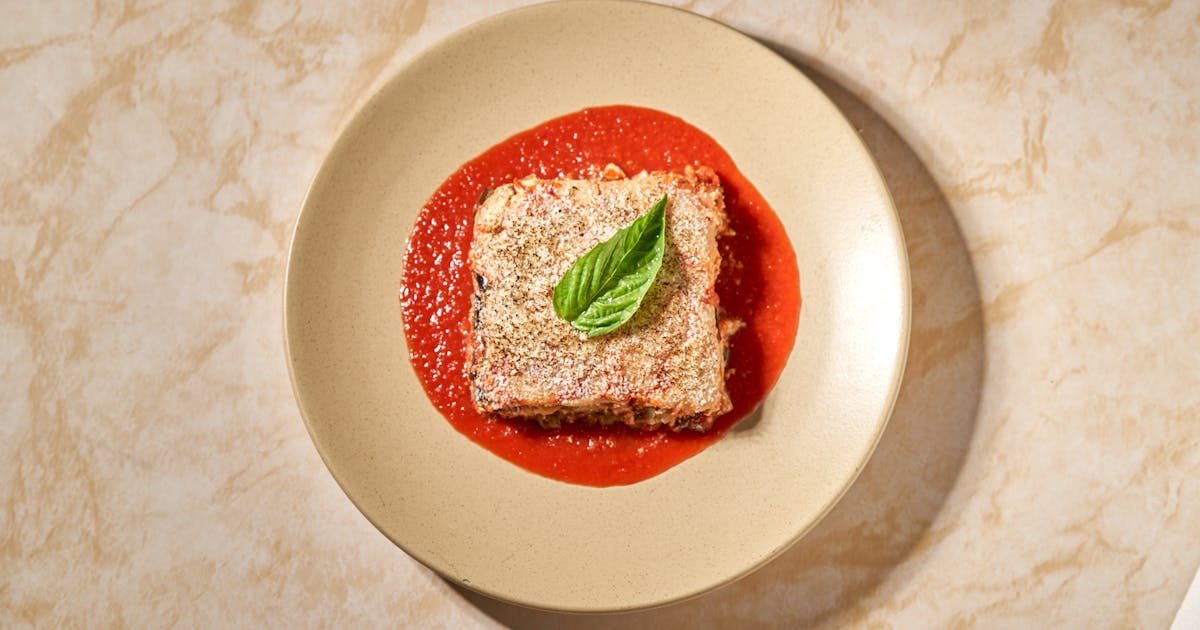
- Presentation Tricks: Use a sharp knife to cut clean squares rather than serving family-style from the baking dish. The sharp knife prevents the cheese from dragging and creates clean edges that show off the layers. Garnish with torn basil leaves instead of whole-torn edges release more aroma. Finish with a drizzle of high-quality extra virgin olive oil and a sprinkle of flaky sea salt (like Maldon) to highlight the flavors. Serve on warm plates to prevent the dish from cooling too quickly. The visual appeal matters as much as the taste-this is a dish meant to be admired before it’s devoured.
- Flavor Boosters: Add a pinch of red pepper flakes to the marinara while it simmers for a subtle heat that builds complexity. Stir in 1 tablespoon tomato paste with the garlic and onion to deepen the sauce’s umami. For extra richness, fold 1/4 cup finely grated Parmigiano-Reggiano into the marinara before assembling. The cheese emulsifies into the sauce, creating a silky texture that clings to the eggplant. Another unexpected addition: a single anchovy fillet dissolved into the marinara while it simmers. The umami from the anchovy enhances the tomatoes’ natural sweetness without adding fishy flavor. I know this sounds radical, but trust me-the anchovy melts completely and adds depth that elevates the entire dish.
Nutrition Facts and Health Benefits
This recipe serves 6, with each serving containing approximately 425 calories, 24g fat (6g saturated), 32g carbohydrates, 8g fiber, 20g protein, 850mg sodium, 35mg cholesterol, and 15% daily value vitamin A, 30% vitamin C, 10% calcium, and 8% iron. The eggplant contributes fiber, potassium, and antioxidants like nasunin, which may protect brain cells. The tomatoes provide lycopene, a powerful antioxidant linked to reduced risk of heart disease and certain cancers. The olive oil offers heart-healthy monounsaturated fats that reduce LDL cholesterol. The cheese provides complete protein and calcium for bone health. The basil contains eugenol, an essential oil with anti-inflammatory properties. Compared to traditional meat-based Parmesan dishes, this vegetarian version has significantly less saturated fat and cholesterol while providing more dietary fiber and certain vitamins. The sodium content is moderate but can be reduced by using low-sodium cheese and omitting added salt in the marinara.
The health benefits extend beyond macronutrients. The eggplant’s fiber supports digestive health and may help regulate blood sugar levels. The lycopene in tomatoes has been shown to protect against UV damage and improve skin health. The basil contains flavonoids that may help fight inflammation. The garlic in the marinara boosts immune function and may reduce risk of certain cancers. The olive oil provides polyphenols that act as antioxidants in the body. This dish is naturally gluten-free adaptable and can be made vegan with the substitutions mentioned earlier. The dish also happens to be vegetarian, making it an excellent meatless Monday option that doesn’t sacrifice satisfaction for health benefits. In my house, we serve it with a simple green salad dressed with lemon and olive oil to balance the richness of the fried eggplant.
For dietary adaptations, here are the specifics: For vegan, use 8 ounces vegan mozzarella, 1/4 cup nutritional yeast, 2 tablespoons olive oil instead of butter in the marinara base, and refined coconut oil for frying. The vegan version has 380 calories per serving, 28g fat, 20g carbohydrates, 7g fiber, 12g protein, and 650mg sodium. For gluten-free, use a gluten-free flour blend and certified gluten-free panko, which adds about 30 calories and 2g more fat per serving due to the blend’s composition. For low-carb, skip the flour entirely and use only egg wash mixed with Parmesan to adhere the cornmeal. This reduces carbohydrates to 12g per serving but increases fat to 30g. For dairy-free, use nutritional yeast mixed with olive oil for the topping, which provides a cheesy flavor without dairy. The nutritional yeast adds 5 calories and 1g protein per tablespoon. For low-sodium, use low-sodium cheese and reduce added salt in the marinara, which cuts sodium to about 500mg per serving but may require additional seasoning with herbs and spices to compensate.
Creative Variations Worth Trying
Recipes, like people, should evolve with time and taste. The beauty of eggplant Parmesan is that it’s a perfect canvas for creative interpretation while maintaining its essential character. These variations draw from different culinary traditions and seasonal ingredients, proving that great dishes can be both rooted in tradition and open to innovation.
Thai-Inspired Coconut Eggplant Parmesan: Replace the marinara with a coconut milk-based sauce made with 1 can full-fat coconut milk, 2 tablespoons red curry paste, 1 tablespoon fish sauce (or soy sauce for vegetarian), 1 tablespoon palm sugar, and 1 stalk lemongrass bruised and simmered 10 minutes then removed. Simmer the sauce 20 minutes until slightly thickened. Add 1/4 cup chopped cilantro and 1 tablespoon lime juice at the end. The coconut milk creates a luscious sauce that clings to the eggplant while the curry paste adds aromatic complexity. The lime juice at the end brightens the dish and cuts through the richness. Serve with jasmine rice and garnish with Thai basil instead of Italian basil.
Lebanese Spiced Eggplant Parmesan: Replace the marinara with a tahini sauce made from 1 cup tahini, 1/2 cup lemon juice, 4 garlic cloves minced, 1 teaspoon ground cumin, 1/2 teaspoon smoked paprika, and 1/2 cup water to thin. Blend until smooth and season with salt to taste. Layer with pickled red onions, fresh mint, and toasted pine nuts instead of cheese. The tahini sauce provides rich, nutty depth that stands up to the fried eggplant. The pickled onions add brightness and acidity that cuts through the richness. This version is naturally dairy-free and vegan-friendly while maintaining the dish’s comforting qualities.
Winter Squash and Kale Eggplant Parmesan: Replace the eggplant with 2 cups roasted butternut squash cubes and 2 cups chopped lacinato kale sautéed with garlic. Use the same marinara and cheese layers. Roast the squash at 400°F (200°C) for 25 minutes until caramelized, then mix with kale sautéed with 2 minced garlic cloves and 1 tablespoon olive oil. The sweetness of roasted squash and the earthiness of kale create a hearty winter version that’s perfect for holiday tables. The kale adds fiber and vitamins while the squash provides natural sweetness that complements the tangy marinara.
Meal Prep Freezer Eggplant Parmesan: Assemble the dish completely but stop before the final bake. Cover tightly with foil and freeze up to 3 months. Thaw overnight in the refrigerator, then bake as directed. The dish reheats beautifully from frozen-just add 10 minutes to the baking time. For individual portions, freeze assembled portions in ramekins and bake straight from frozen, adding 5 minutes to the baking time. The cheese acts as insulation, preventing the eggplant from becoming mushy. This version is perfect for busy weeks when you want homemade food without daily effort. The flavors actually improve after freezing as the ingredients meld together.
Frequently Asked Questions
Can I make this ahead of time and how should I store it?
You can prepare this dish completely up to the baking stage and refrigerate assembled portions for up to 3 days. Cover tightly with plastic wrap pressed directly onto the surface to prevent a skin from forming. Bake straight from the refrigerator, adding 5-10 minutes to the baking time. For longer storage, freeze assembled portions for up to 3 months. Thaw overnight in the refrigerator before baking. The dish reheats beautifully from both fridge and freezer-just cover with foil if reheating from frozen to prevent over-browning. Leftovers keep 4 days in the refrigerator and reheat well in a skillet over medium heat with a splash of water to prevent drying. Never microwave eggplant Parmesan-it turns the texture to mush and creates steam that makes the breading soggy.
What can I serve alongside this dish to make it a complete meal?
Start with a simple green salad dressed with lemon and olive oil-its acidity cuts through the richness. Garlic bread made with a baguette and good butter is perfect for soaking up sauce. Roasted broccoli with lemon zest adds bright, crunchy contrast. For something heartier, try white beans braised with garlic and sage-high in protein and fiber. A crisp white wine like Pinot Grigio or a light-bodied red like Chianti works beautifully. For beer lovers, a pilsner or saison provides enough carbonation to cleanse the palate. If serving for dinner parties, offer both a light and a rich side to accommodate different preferences. Avoid heavy sides like mashed potatoes or macaroni and cheese-this dish is rich enough on its own.
Why did my dish turn out soggy and how do I fix it?
Sogginess usually results from three issues: over-salting the eggplant without proper draining, frying at too low a temperature, or assembling the dish while components are still warm. When eggplant is salted heavily and rinsed, it becomes a sponge that absorbs oil and sauce. Always salt eggplant dry, let it rest, then press gently without rinsing. Oil temperature below 300°F (150°C) causes the breading to absorb fat rather than creating a crisp barrier. Use a thermometer and maintain 325°F (160°C) for first fry, 375°F (190°C) for second. Finally, let fried eggplant cool completely before assembling-if it’s still warm when you add sauce, steam will soften the breading. For rescue attempts, place assembled portions under the broiler for 2-3 minutes to crisp the top layer before serving.
What are the best ingredient substitutions if I’m missing something?
For the cheese, if you’re missing mozzarella, use young provolone for meltiness or fontina for richness. If missing Parmigiano-Reggiano, use Grana Padano or aged Asiago in equal amounts. For breadcrumbs, use crushed saltines or regular breadcrumbs in equal amounts-panko is preferred for texture but not essential. If missing fresh basil, use dried basil at half the amount but add it during the marinara simmer rather than at the end. For tomatoes, use any good canned tomato in a pinch, but San Marzano has the best flavor. If missing cornmeal, use additional panko but expect slightly less crunch. For egg wash, use beaten yogurt or buttermilk for binding properties. The key is maintaining the right ratios: flour to egg wash to breading should stay consistent for proper adhesion.
Final Thoughts from the Kitchen
There’s something deeply satisfying about watching someone take their first bite of this eggplant Parmesan and see their eyes light up with surprise. The texture-the crisp exterior giving way to tender eggplant, the sauce clinging just enough to be saucy but not drowning, the cheese melting in perfect harmony-it’s the kind of dish that makes you fall in love with vegetables all over again. I remember the first time my son, who once declared vegetables “plant garbage,” asked for seconds of this dish. He ate two full servings before realizing it was made without meat. That’s the power of excellent vegetable cookery: it doesn’t ask you to compromise, it invites you to discover new depths of flavor.
This dish taught me that cooking isn’t about following rules-it’s about understanding principles and adapting them to your ingredients, your tools, and your taste. The techniques I’ve shared here work because they’re based on food science and tradition, not internet trends or convenience. That said, don’t be afraid to experiment. Try adding roasted red peppers to the marinara. Swap the basil for mint. Make it spicy or make it sweet. The structure is what matters-the layers of flavor and texture that make each bite interesting. And if you find yourself in Naples someday, look for the oldest trattoria you can find. Order melanzane alla parmig